Part of the Brain Health Hub
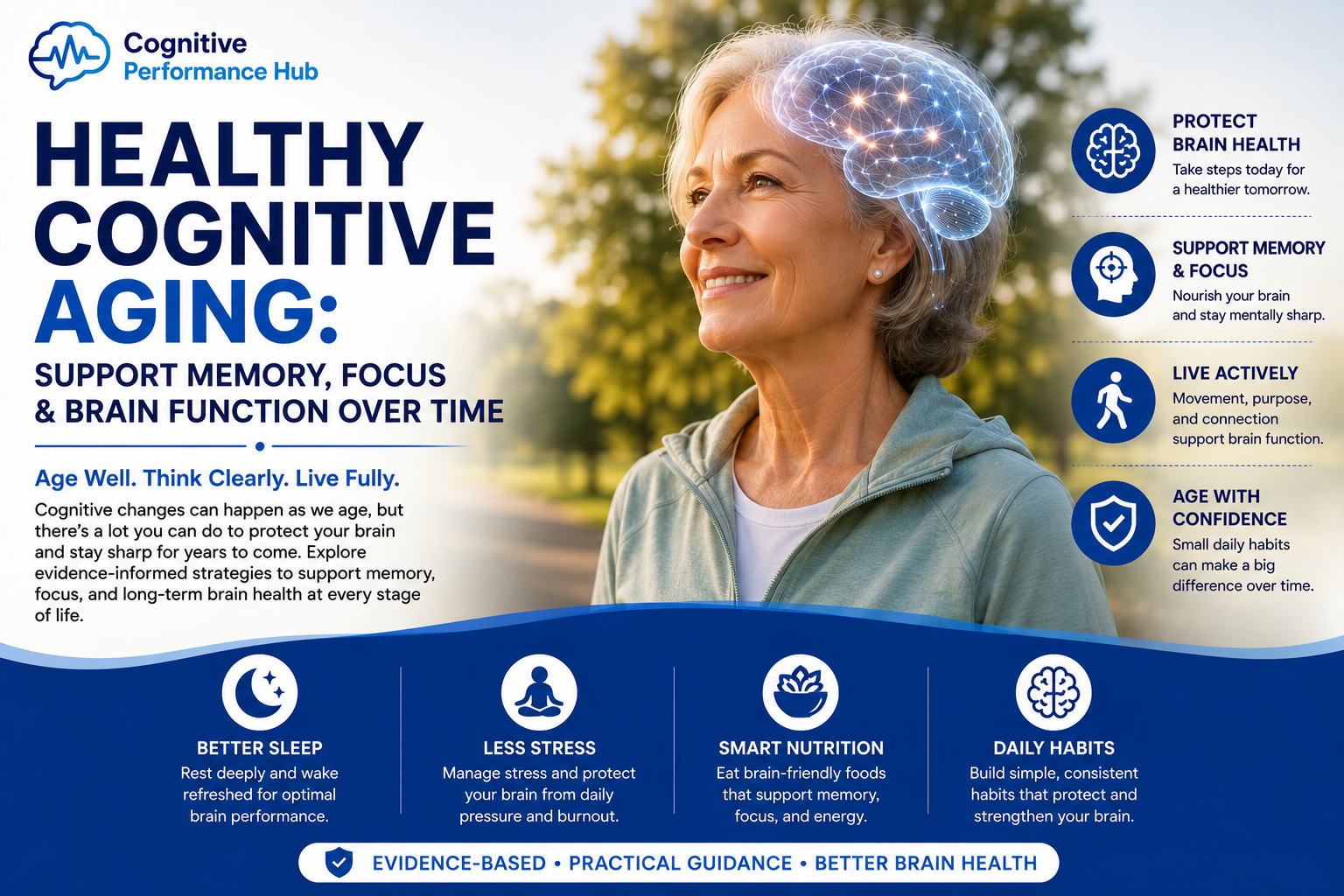
Healthy cognitive aging is about supporting memory, focus, learning, decision-making, and mental sharpness as you get older. Some changes in thinking speed and recall can happen with age, but cognitive decline is not the same thing as dementia, and many people stay mentally capable and independent well into later life. The goal is not perfection. The goal is to protect brain function, stay engaged, and reduce avoidable risks over time.
Aging affects the brain, but it does not automatically mean serious memory loss. The National Institute on Aging notes that older adults may take longer to learn new information or remember a name, yet many can still learn new skills, form new memories, and adapt to new challenges. Healthy aging also includes physical, mental, and social well-being, and it is never too early or too late to support it.
If you have been dealing with forgetfulness, low mental energy, or slower thinking, this page will help you understand what is normal, what deserves attention, and which habits may help support long-term brain health. You may also want to explore our pages on Memory & Cognitive Function, Focus & Mental Clarity, and Brain Fog.
What Healthy Cognitive Aging Means
Cognitive health is the ability to think, learn, and remember clearly enough to manage daily life. Healthy cognitive aging means maintaining those abilities as much as possible while adapting to normal age-related changes. It also means supporting independence, confidence, emotional well-being, and quality of life.
This is important because brain health is shaped by more than one factor. Physical activity, sleep, social connection, chronic disease management, nutrition, hearing, vision, mood, and medication effects can all influence how clearly a person thinks over time. In other words, healthy cognitive aging is not just about memory exercises. It is about the whole health picture.
What Is Normal With Age, and What Is Not?
Some mild changes in memory and thinking can be a normal part of aging. For example, it may take longer to recall a word, remember a detail, or learn something new. Needing more time does not automatically mean there is a disease process. NIA notes that these kinds of changes are often considered age-related forgetfulness.
What is not considered normal is when memory or thinking problems start interfering with everyday life. Trouble managing bills, getting lost in familiar places, repeating the same questions often, marked confusion, or a major decline in judgment should be taken seriously. These kinds of symptoms deserve medical evaluation because they may reflect mild cognitive impairment, dementia, depression, medication effects, sleep problems, or another underlying issue.
Mild cognitive impairment, or MCI, sits between normal aging and dementia. People with MCI have more memory or thinking problems than others their age, but they can usually still handle daily activities independently. MCI can be an early sign of Alzheimer’s disease for some people, but not everyone with MCI will go on to develop dementia.
Why Cognitive Function Changes Over Time
As people age, the brain changes too. Certain brain regions may shrink, communication between neurons may become less efficient, blood flow in the brain may decrease, and inflammation may increase. These changes can affect memory, learning, and mental speed even in otherwise healthy adults.
At the same time, aging brains remain adaptable. NIA notes there is growing evidence that the brain can continue to change and respond to new challenges later in life. Older adults can still learn, strengthen skills, and build routines that support better daily cognitive function. That is one reason healthy cognitive aging should focus on support and protection rather than assuming decline is inevitable.
The Lifestyle Factors That Matter Most
Physical activity
Regular movement is one of the most practical ways to support healthy aging. WHO recommends physical activity as part of risk reduction for cognitive decline and dementia, and CDC resources also connect regular exercise with lower risk for memory loss and confusion. Movement supports vascular health, metabolic health, mood, and overall resilience, all of which matter for the brain.
You do not need a perfect plan to benefit. Walking, strength work, balance training, mobility exercises, dancing, swimming, and low-impact routines can all be valuable. The most important factor is consistency. If you are also working on daily habits, visit Brain Health Lifestyle: Sleep, Stress, Nutrition & Daily Habits.
Sleep
Older adults generally still need about seven to nine hours of sleep each night. NIA notes that while sleep timing often shifts with age, poor sleep is common and can leave people less alert and less mentally sharp during the day. Chronic sleep problems should not be dismissed as “just aging.”
Good sleep supports concentration, energy, mood, and daily cognitive performance. If sleep is poor, it makes sense to look at sleep hygiene, medication timing, stress, sleep apnea, pain, and other medical issues that may be contributing.
Nutrition and metabolic health
WHO recommends healthy diet patterns and management of blood pressure, cholesterol, and blood sugar as part of reducing the risk of cognitive decline and dementia. NIA also notes that what we eat appears to affect the aging brain’s ability to think and remember.
For most people, the foundation is simple: eat a mostly whole-food diet, include vegetables and other nutrient-dense foods regularly, avoid chronic overreliance on ultra-processed foods, and support steady metabolic health over time. Because vascular and metabolic health affect the brain, this area matters more than many people realize.
Social engagement and meaningful activity
Social connection matters for brain health. NIA reports that loneliness and social isolation are associated with higher risks for several health problems, including cognitive decline. Research highlighted by NIA also links social engagement with better cognitive function in later life.
That does not mean you need a packed social calendar. It means staying connected in ways that are realistic and meaningful. Regular conversations, volunteering, group classes, church or community involvement, shared hobbies, and family interaction can all help support mental and emotional well-being over time.
Learning and mental stimulation
Healthy cognitive aging also involves using the brain. NIA notes that older adults can continue learning new skills, forming memories, and improving performance in different areas. Learning a new craft, language, instrument, technology skill, or game may help keep the mind engaged.
Mental stimulation is most useful when it is regular and meaningful. Real-life challenge, novelty, and engagement usually matter more than doing random “brain games” once in a while. For deeper support, see Memory & Cognitive Function and Focus & Mental Clarity.
Medical Factors That Can Affect Cognitive Aging
Hearing and vision
NIA advises treating age-related sensory problems such as hearing or vision loss as part of supporting cognitive health. Hearing loss in particular has been linked with faster cognitive decline and greater dementia risk in older adults.
This is one reason not to ignore hearing changes. Addressing hearing issues early may help reduce social withdrawal, communication strain, and cognitive load. Vision problems can also affect independence, safety, and overall brain function.
Blood pressure, blood sugar, cholesterol, and chronic conditions
Managing chronic health problems is part of protecting the brain. NIA specifically points to high blood pressure, diabetes, depression, and high cholesterol as conditions worth managing carefully for cognitive health. WHO guidance also highlights blood pressure, blood sugar, cholesterol, weight, smoking, alcohol, diet, and activity as key modifiable factors.
That means healthy cognitive aging is not separate from the rest of healthy aging. The brain depends heavily on good circulation, stable energy regulation, and lower long-term inflammatory burden. Even modest improvement in overall health habits can support the larger goal of preserving function.
Mood, depression, and stress
Depression is common in older adults, but NIA is clear that it is not a normal part of aging. Mood symptoms can affect motivation, concentration, sleep, and thinking, and should not be brushed aside.
Stress and emotional strain can also worsen day-to-day cognitive performance, especially attention, focus, and recall. If low mood, anxiety, or persistent overwhelm are part of the picture, they should be addressed alongside memory concerns rather than treated as separate issues. You may also want to read Brain Fog if your symptoms feel more like low mental clarity than clear memory loss.
Medication effects and polypharmacy
Some medications can affect memory, alertness, sleep, or brain function. NIA advises talking with a health care provider about medicine side effects, and its medication guidance for older adults notes that drugs with anticholinergic effects can contribute to confusion, memory loss, and worsening mental function.
This does not mean people should stop medicines on their own. It means a medication review can be worthwhile, especially when brain fog, memory concerns, daytime sleepiness, or confusion seem to worsen after medication changes.
Practical Habits That Support Healthy Cognitive Aging
A practical cognitive aging routine does not need to be complicated. A strong foundation often includes regular walking or exercise, consistent sleep timing, social contact, nutritious meals, treatment of hearing or vision issues, and medical follow-up for blood pressure, blood sugar, mood, and medications. These habits align with the major risk-reduction themes emphasized by NIA, CDC, and WHO.
It also helps to keep using your brain in real life. Read, write, plan, cook, learn new tools, have conversations, solve practical problems, and stay involved in meaningful activities. The aim is not to become mentally busy for its own sake. The aim is to stay engaged, capable, and connected.
When to Talk to a Doctor
It is a good idea to speak with a health professional if memory or thinking changes are getting worse, causing concern, or interfering with daily life. Difficulty managing finances, getting lost, major personality changes, repeating the same stories or questions frequently, increased confusion, or trouble completing familiar tasks are all reasonable reasons to seek evaluation.
Early evaluation matters because not all cognitive symptoms are dementia. Sleep disorders, depression, medication side effects, hearing loss, vitamin issues, infections, and other medical conditions may contribute. Getting checked does not mean something serious is certain. It means you are taking symptoms seriously and giving yourself the best chance of finding helpful answers.
Healthy Cognitive Aging Is a Long-Term Process
Healthy cognitive aging is built over time. It is shaped by daily habits, social connection, medical care, movement, sleep, and the willingness to stay mentally active. Some age-related change is normal, but losing hope or assuming decline is inevitable is not the right framework. Many people can support brain health meaningfully through consistent, realistic actions.
If you want to build a stronger foundation, start with our Start Here page, then explore the Brain Health Guide and the Resource Library for related topics across memory, focus, lifestyle, brain fog, and brain support strategies.
Related Pages
- Brain Health Hub
- Brain Health Guide
- Memory & Cognitive Function
- Focus & Mental Clarity
- Brain Fog
- Brain Health Lifestyle: Sleep, Stress, Nutrition & Daily Habits
- Brain Supplements
- Start Here
- Resource Library
FAQ Section
1. What is healthy cognitive aging?
Healthy cognitive aging means supporting the ability to think, learn, remember, and function independently as you get older. It recognizes that some age-related change is normal while aiming to protect long-term brain health and daily function.
2. Is some forgetfulness normal with age?
Yes. Taking longer to remember a name or learn something new can be a normal part of aging. The bigger concern is when memory or thinking problems begin to interfere with normal daily life.
3. What is the difference between normal aging and dementia?
Normal aging may involve slower recall or mild forgetfulness. Dementia involves a more serious decline in memory, thinking, or behavior that disrupts everyday activities and independence.
4. What is mild cognitive impairment?
Mild cognitive impairment, or MCI, means a person has more memory or thinking difficulty than others their age, but can usually still manage day-to-day tasks. MCI can increase concern, but it does not always progress to Alzheimer’s disease.
5. Can exercise help support brain aging?
Regular physical activity is one of the lifestyle approaches recommended in risk-reduction guidance for cognitive decline and dementia. It also supports overall healthy aging.
6. How much sleep do older adults need?
Older adults generally need about seven to nine hours of sleep each night, similar to other adults. Persistent sleep problems should be discussed with a clinician.
7. Does hearing loss affect cognitive health?
Yes. NIA notes that hearing loss is associated with faster cognitive decline and greater dementia risk in older adults, which is why hearing changes should not be ignored.
8. Can older adults still improve memory and learn new things?
Yes. NIA states that older adults can still learn new skills, form new memories, and improve performance in different areas.
9. Which health conditions matter most for cognitive aging?
Blood pressure, blood sugar, cholesterol, depression, hearing loss, sleep problems, and medication side effects can all affect brain function and should be taken seriously.
10. When should I see a doctor about memory changes?
You should seek medical advice if symptoms are worsening, causing concern, or affecting daily life, such as getting lost, repeating questions often, struggling with familiar tasks, or showing unusual confusion.
Support Healthy Cognitive Aging With the Right Next Step
Want to improve memory, focus, and long-term brain health? Start with the core guides, then explore practical lifestyle and brain support topics at your own pace.
Medically Reviewed for Accuracy
This content has been reviewed for accuracy and clarity by the Cognitive Performance Hub Medical Review Team, using current research and evidence-based guidelines.
Our review process ensures that information related to brain health, cognitive performance, and wellness strategies aligns with current scientific understanding and best practices.
Written by Cognitive Performance Hub Editorial Team
Our editorial team consists of health researchers and writers specializing in brain health, cognitive performance, and evidence-based wellness strategies.
We create clear, research-informed content designed to help readers improve focus, enhance memory, reduce brain fog, and support long-term cognitive health.
Brain Health Safety Note
This content is for educational purposes only and should not be used as a substitute for medical advice, diagnosis, or treatment.
If you are experiencing significant memory problems, confusion, sudden cognitive changes, neurological symptoms, or concerns about brain health, speak with a qualified healthcare professional promptly.
Never delay seeking medical advice because of something you read on this site.
Affiliate Transparency
Some pages on Cognitive Performance Hub may include affiliate links. If you choose to make a purchase through one of these links, we may earn a small commission at no extra cost to you.
Our editorial content is created independently and is designed to prioritize clarity, evidence-informed information, and reader value.