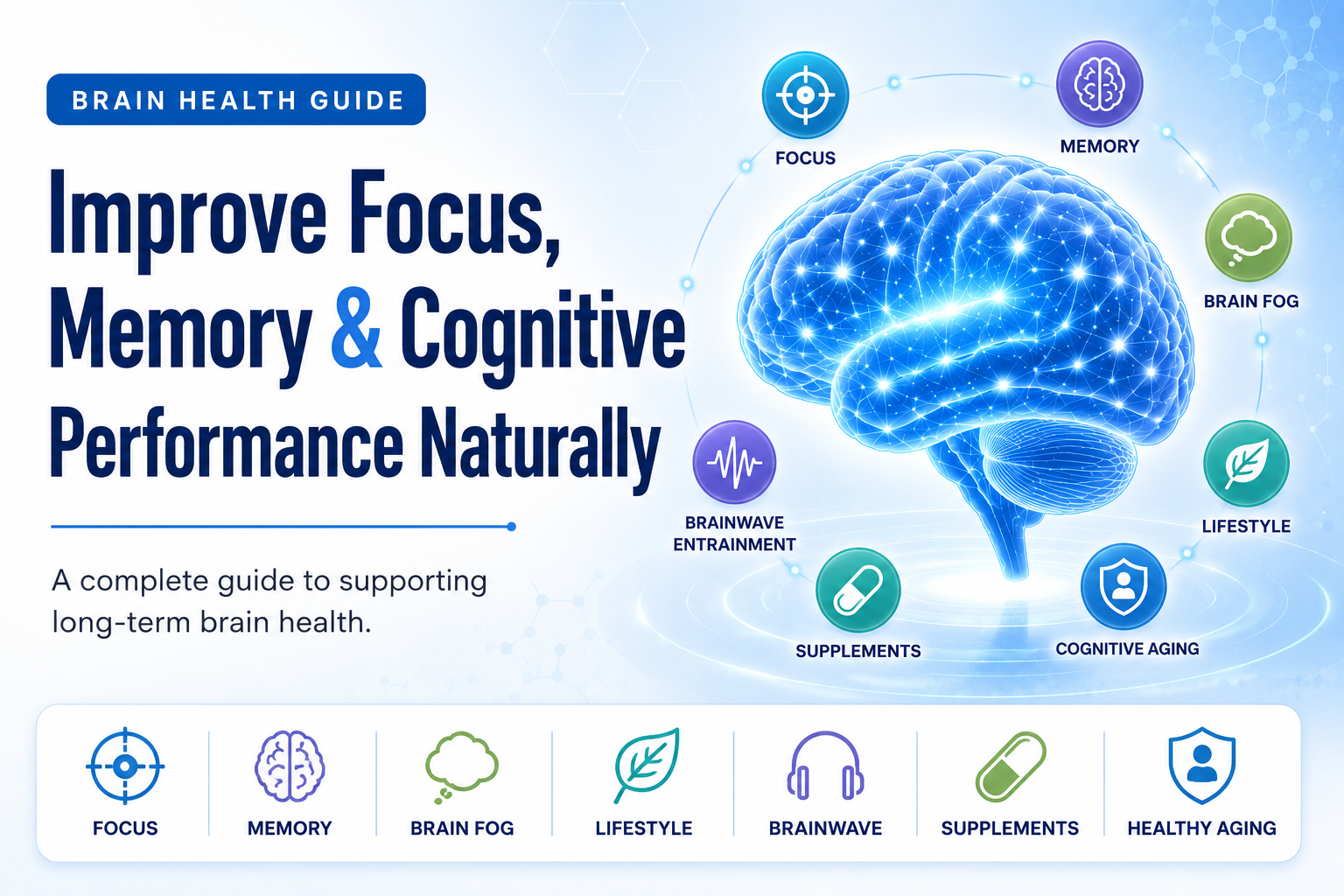
Brain Health Guide: Improve Focus, Memory & Cognitive Performance Naturally
This practical brain health guide helps you understand the main factors that influence focus, memory, brain fog, mental energy, and long-term cognitive resilience.
Begin with the bigger picture, identify the area that matters most to you, and then move into the topic pathway that best matches your goals.
Begin With the Right Level of Support
Choose the starting point that best matches how much guidance you need.
Read This Complete Guide
Best if you want a broad understanding of how focus, memory, brain fog, lifestyle, supplements, brainwave tools, and cognitive aging fit together.
Continue Through the GuideStart Here
Best if you want a simple goal-based pathway that helps you choose exactly where to begin.
Use the Guided PathBrain Health Hub
Best if you want to browse all major brain health pillars and supporting content from one central navigation page.
Explore the HubBrain Health Is More Than One Symptom
Brain health affects how clearly you think, how effectively you focus, how well you remember information, and how mentally resilient you feel from day to day.
Problems such as brain fog, distraction, mental fatigue, or forgetfulness are often influenced by overlapping factors including sleep, stress, nutrition, exercise, daily routines, aging, medical conditions, and overall health.
A broader strategy can therefore be more useful than focusing on a single symptom in isolation.
Choose the Area That Matches Your Goal
Each pathway connects to deeper guides and supporting articles so you can move from a broad overview into the topic most relevant to you.
Focus & Mental Clarity
Explore concentration, distraction, mental fatigue, cognitive overload, and practical strategies for staying mentally sharper.
Memory & Cognitive Function
Learn about everyday recall, forgetfulness, memory improvement, and how to distinguish normal memory changes from more concerning signs.
Brain Fog & Mental Sluggishness
Understand poor mental clarity, sluggish thinking, concentration problems, and common lifestyle or health-related contributors.
Brain Health Lifestyle
Explore how sleep, stress, movement, nutrition, hydration, and daily routines influence clarity, concentration, memory, and mental energy.
Healthy Cognitive Aging
Understand age-related memory changes, cognitive resilience, early warning signs, and strategies that may support healthier brain aging.
Brain Supplements & Nootropics
Compare supplement categories, nootropics, memory products, and cognitive-support options using responsible, evidence-aware guidance.
Brainwave Entrainment, Binaural Beats & Brain Audio
Brainwave entrainment is a growing area of interest for people exploring non-drug tools for concentration, relaxation, meditation, sleep, and mental clarity. This pathway explains binaural beats, brain wave states, isochronic tones, safety considerations, headphones, and realistic expectations.
Which Description Matches You Best?
Choose the statement that most closely reflects your current concern or brain health goal.
Build Brain Health From the Foundations Up
For many readers, better brain health begins with the fundamentals: consistent sleep, stress regulation, movement, nutritious food, hydration, appropriate medical care, and sustainable daily routines.
Supplements, brainwave audio, and more advanced tools may be useful in some situations, but they are best viewed as optional parts of a broader strategy rather than replacements for the basics.
Responsible, Evidence-Informed Education
Cognitive Performance Hub focuses on practical education, clear navigation, root-cause awareness, medically responsible language, and realistic expectations without exaggerated health or product claims.
Frequently Asked Questions
Clear answers to common questions about focus, memory, brain fog, lifestyle support, brainwave tools, supplements, and cognitive aging.
What is this brain health guide for?
This guide provides a broad overview of the main areas that influence cognitive performance, including focus, memory, brain fog, lifestyle, brainwave entrainment, supplements, and healthy cognitive aging.
Where should beginners start?
Beginners can continue through this guide, use Start Here for a guided pathway, or visit the Brain Health Hub to browse every major topic pillar.
What is the best page to read after this guide?
The best next page depends on your goal. Choose Focus & Mental Clarity for concentration, Memory & Cognitive Function for recall, Brain Fog for mental sluggishness, or Brain Health Lifestyle for habit-based support.
What factors can contribute to brain fog?
Brain fog can be associated with poor sleep, stress, nutritional issues, blood sugar changes, illness, medication effects, mental overload, and other health factors. Persistent or sudden symptoms should be discussed with a healthcare professional.
Which lifestyle habits matter most for brain health?
Consistent sleep, regular physical activity, balanced nutrition, hydration, stress management, cognitive stimulation, and appropriate medical care are important foundations for brain health.
Are supplements necessary for better brain health?
No. Supplements may be useful for some people, but they are not the foundation of brain health. Sleep, nutrition, exercise, stress management, medical care, and daily routines are also important.
What is brainwave entrainment?
Brainwave entrainment refers to the use of rhythmic sound or sensory stimulation intended to encourage brain activity to follow a particular pattern. Common examples include binaural beats and isochronic tones.
Can binaural beats replace medical treatment?
No. Binaural beats and other audio tools should be viewed as optional wellness or relaxation tools. They are not substitutes for medical assessment, diagnosis, or treatment.
Can brain health be supported as you get older?
Healthy habits, physical activity, social engagement, cognitive stimulation, medical care, sleep, and nutrition may all help support cognitive resilience over time, although individual needs vary.
Where can I browse all brain health articles?
Visit the Resource Library to browse the site’s complete collection of brain health topics and supporting articles.
Is this site a substitute for medical advice?
No. Cognitive Performance Hub provides educational information only and should not replace professional medical advice, diagnosis, or treatment.
Explore the Next Brain Health Path
Choose the next page that best matches your goal, whether you want clearer thinking, better focus, stronger memory, healthier habits, brainwave audio guidance, supplement research, or long-term cognitive support.
References & Scientific Sources
Cognitive Performance Hub is committed to publishing evidence-based educational content. The information on this page has been reviewed against guidance from recognised health organisations, clinical guidelines, and peer-reviewed scientific research.
Brain Health
Cognitive Health and Older Adults
Dementia Fact Sheet
Risk Reduction of Cognitive Decline and Dementia Guidelines
Dementia Prevention, Intervention and Care (2024)
Sleep and Sleep Disorders
Physical Activity
Dietary Supplements and Cognitive Function
Our Editorial Standards
Our articles are reviewed against current evidence from government health agencies, international clinical guidelines, systematic reviews, and peer-reviewed medical literature. We regularly review and update our content to reflect new evidence where appropriate. This information is intended for educational purposes only and should not replace professional medical advice.
Medically Reviewed for Accuracy
This content has been reviewed for accuracy and clarity by the Cognitive Performance Hub Medical Review Team, using current research and evidence-based guidelines.
Our review process ensures that information related to brain health, cognitive performance, and wellness strategies aligns with current scientific understanding and best practices.
Written by Cognitive Performance Hub Editorial Team
Our editorial team consists of health researchers and writers specializing in brain health, cognitive performance, and evidence-based wellness strategies.
We create clear, research-informed content designed to help readers improve focus, enhance memory, reduce brain fog, and support long-term cognitive health.
Affiliate Transparency
Some pages on Cognitive Performance Hub may include affiliate links. If you choose to make a purchase through one of these links, we may earn a small commission at no extra cost to you.
Our editorial content is created independently and is designed to prioritize clarity, evidence-informed information, and reader value.
Brain Health Safety Note
This content is for educational purposes only and should not be used as a substitute for medical advice, diagnosis, or treatment.
If you are experiencing significant memory problems, confusion, sudden cognitive changes, neurological symptoms, or concerns about brain health, speak with a qualified healthcare professional promptly.
Never delay seeking medical advice because of something you read on this site.