This page is part of the Brain Health Hub. If you are new to the site, you can also begin with Start Here or explore the Brain Health Guide for a broader overview of natural strategies that support focus, memory, and long-term cognitive performance.
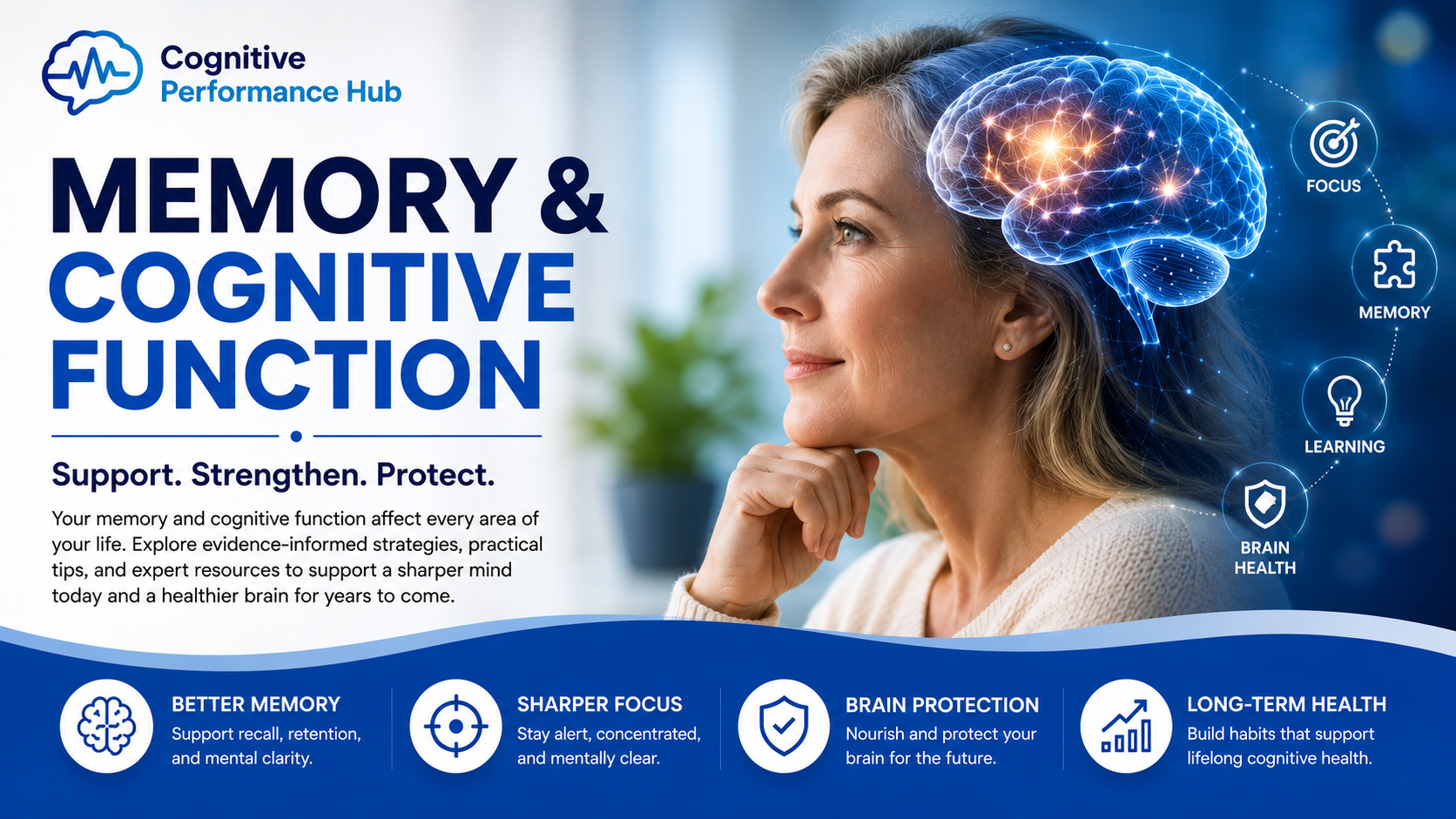
Memory and cognitive function influence how well you learn, process information, stay organized, recall names and details, follow conversations, solve problems, and manage everyday tasks. Memory is the process of storing and remembering information, while cognitive health refers more broadly to how well you think, learn, and remember. It is normal for recall to feel less sharp at times, especially with stress, poor sleep, or aging, but noticeable and persistent changes deserve attention.
What memory and cognitive function actually mean
Memory and Cognitive Function Are Connected—but Not Identical
Memory is one part of a wider cognitive system that helps you learn, reason, concentrate, communicate, and manage everyday life.
Memory
Memory allows you to store and retrieve information. Short-term memory holds information briefly, while long-term memory retains experiences, knowledge, and learned skills.
Cognitive Function
Cognitive function is the broader system that includes memory, attention, learning, processing speed, language, judgment, reasoning, and problem-solving.
When people say they are worried about memory, they are often describing more than recall alone. Sometimes the real issue is slower processing, difficulty concentrating, mental fatigue, stress overload, or what many people describe as brain fog. That is why it can help to also review Brain Fog: Causes, Symptoms & How to Clear It if your symptoms include fuzzy thinking, low mental stamina, or trouble staying clear and productive.
Why memory can feel worse at certain times
Common contributors
Memory Can Change for Many Reasons
Forgetfulness does not always indicate dementia or permanent cognitive decline. Memory and concentration can temporarily worsen when the brain is affected by physical, emotional, or lifestyle pressures.
Persistent or worsening symptoms should not be dismissed. Identifying a treatable contributor—such as poor sleep, medication effects, depression, or a nutritional deficiency—may make a meaningful difference.
Common factors that affect memory and cognitive function
Memory rarely depends on one factor alone. These six areas can influence how effectively the brain learns, stores, processes, and recalls information.
Sleep Quality
Sleep supports learning and memory formation. Consistently short, fragmented, or unrefreshing sleep can reduce concentration and make recall less reliable.
Stress and Mental Overload
Chronic stress divides attention and increases cognitive strain, making it harder to encode new information and retrieve it efficiently later.
Physical Activity
Regular movement supports cardiovascular health, circulation, sleep, mood, and other systems that contribute to healthy cognitive function.
Blood Pressure and Metabolic Health
Blood pressure, blood sugar, cholesterol, and vascular health can influence long-term brain function and cognitive resilience.
Nutrition and Hydration
Balanced eating patterns and adequate hydration are more useful than relying on isolated “brain foods” or products promoted as quick fixes.
Social and Sensory Health
Social engagement, meaningful activity, hearing, vision, medication use, and alcohol intake can all affect cognitive demand and everyday memory.
Normal forgetfulness vs signs you should take seriously
Everyday Forgetfulness
- Taking longer to remember a name
- Misplacing an item occasionally
- Forgetting something and recalling it later
- Needing more reminders during stressful periods
- Remaining able to manage normal daily life
More Concerning Changes
- Repeating the same questions frequently
- Getting lost in familiar places
- Increasing confusion about time or location
- Difficulty following familiar directions
- Trouble managing routine tasks safely
Natural ways to support memory and cognitive function
Supporting memory is usually less about finding one shortcut and more about strengthening the daily conditions that help the brain learn, focus, and recall information.
Protect Sleep Consistency
Keep a regular schedule, reduce late caffeine, limit screen exposure before bed, and investigate persistent snoring or disrupted sleep.
Build Daily Movement
Walking, resistance exercise, cycling, swimming, and mobility work can support circulation, mood, sleep, and overall brain health.
Support Vascular and Metabolic Health
Blood pressure, blood sugar, cholesterol, nutrition, and regular activity contribute to long-term cognitive resilience.
Keep Learning in Real Life
Reading, writing, music, teaching, strategic games, classes, and new skills provide meaningful cognitive stimulation.
Reduce Overload and Stay Connected
Single-task more often, limit constant interruptions, make time for recovery, and maintain meaningful social relationships and activities.
Can supplements help memory?
Supplements Are an Add-On, Not the Foundation
Memory supplements should not replace sleep, physical activity, balanced nutrition, medical evaluation, or management of cardiovascular and metabolic risk factors. No vitamin or supplement is currently recommended as a proven way to prevent Alzheimer’s disease or general cognitive decline, so strong marketing claims should be treated cautiously.
If you want to review options carefully, visit Brain Supplements and the Brain Supplement Reviews section for educational comparisons and ingredient breakdowns.
When to speak with a doctor
When Memory Changes Need Professional Attention
Speak with a qualified healthcare professional when memory problems are persistent, worsening, or beginning to interfere with work, communication, safety, or everyday independence.
- Increasing confusion or disorientation
- Getting lost in familiar places
- Difficulty managing routine tasks or medications
- Noticeable language or personality changes
- Falls, balance problems, or new neurological symptoms
- Changes following a head injury, severe illness, or medication change
Seek urgent medical care for sudden confusion, sudden weakness, facial drooping, difficulty speaking, a severe new headache, or other abrupt neurological symptoms.
Memory and cognitive function support starts with the basics
Strong memory is rarely built through one shortcut. It is usually supported by a combination of sleep, movement, stable energy, healthy blood pressure and blood sugar, lower stress, meaningful mental stimulation, and social connection. If you focus on these fundamentals consistently, you give your brain a better environment to learn, remember, and perform well over time.
For a broader next step, continue to the Healthy Cognitive Aging pillar, review the Brain Health Guide, or browse all topics in the Resource Library.
Frequently Asked Questions
What is memory and cognitive function?
Memory is the process of storing and remembering information. Cognitive function refers more broadly to how well you think, learn, and remember.
Is memory loss a normal part of aging?
Some mild forgetfulness can be a normal part of aging, such as taking longer to recall names or occasionally misplacing items. Memory problems that interfere with daily activities are not considered a normal part of aging.
What can cause poor memory and concentration?
Poor sleep, stress, depression, anxiety, medication side effects, alcohol misuse, poor nutrition, low vitamin B12, and some medical conditions can all affect memory and concentration.
Can sleep affect memory?
Yes. Sleep is important for learning and memory, and not getting enough quality sleep can make memory and concentration worse.
Does stress make you more forgetful?
It can. NIA notes that stress and negative emotions can leave people feeling confused or forgetful, especially during difficult or overwhelming periods.
What habits support memory and cognitive function?
Helpful habits include regular physical activity, enough sleep, healthy eating, managing blood pressure and blood sugar, staying socially connected, and keeping the mind engaged with meaningful activities.
Are brain games enough to improve memory?
Probably not on their own. NIA says there is not enough evidence to conclude that commercially available brain-training apps have the same effect as more structured cognitive training used in research.
Can supplements improve memory?
Some supplements are marketed for memory support, but NIA says no vitamin or supplement is currently recommended for preventing Alzheimer’s or other forms of cognitive decline. Foundations such as sleep, activity, and metabolic health matter more.
What is mild cognitive impairment?
Mild cognitive impairment, or MCI, means a person has more memory or thinking problems than others their age, but can usually still manage daily life independently.
When should I see a doctor about memory problems?
You should seek medical advice if memory problems are getting worse, affecting daily life, causing confusion, or appearing with other changes such as language problems, getting lost, mood changes, or trouble managing routine tasks.
Support Your Brain From the Ground Up
Better memory and cognitive function usually begin with better foundations. Start with your core brain health plan, then explore targeted strategies for focus, brain fog, and long-term cognitive support.
Looking for targeted support options? Explore the Brain Supplements hub for ingredient education and review content.
Evidence and further reading
References & Sources
This article was informed by guidance and educational resources from recognised government health agencies and research institutions.
- Memory Problems, Forgetfulness, and Aging National Institute on Aging, National Institutes of Health
- What Is Mild Cognitive Impairment? National Institute on Aging, National Institutes of Health
- What Do We Know About Healthy Aging? National Institute on Aging, National Institutes of Health
- Preventing Alzheimer’s Disease: What Do We Know? National Institute on Aging, National Institutes of Health
- About Sleep Centers for Disease Control and Prevention
- Physical Activity Guidelines for Americans U.S. Department of Health and Human Services
- Age-Related Forgetfulness or Signs of Dementia? National Institute on Aging, National Institutes of Health
Sources are provided for transparency and further reading. This page is educational and does not replace individual medical advice, diagnosis, or treatment.

Medically Reviewed for Accuracy
This content has been reviewed for accuracy and clarity by the Cognitive Performance Hub Medical Review Team, using current research and evidence-based guidelines.
Our review process ensures that information related to brain health, cognitive performance, and wellness strategies aligns with current scientific understanding and best practices.
Written by Cognitive Performance Hub Editorial Team
Our editorial team consists of health researchers and writers specializing in brain health, cognitive performance, and evidence-based wellness strategies.
We create clear, research-informed content designed to help readers improve focus, enhance memory, reduce brain fog, and support long-term cognitive health.
Brain Health Safety Note
This content is for educational purposes only and should not be used as a substitute for medical advice, diagnosis, or treatment.
If you are experiencing significant memory problems, confusion, sudden cognitive changes, neurological symptoms, or concerns about brain health, speak with a qualified healthcare professional promptly.
Never delay seeking medical advice because of something you read on this site.