Part of the Brain Health Hub
You may also want to read the Brain Health Guide for a broader overview of memory, focus, cognitive performance, and long-term brain support.
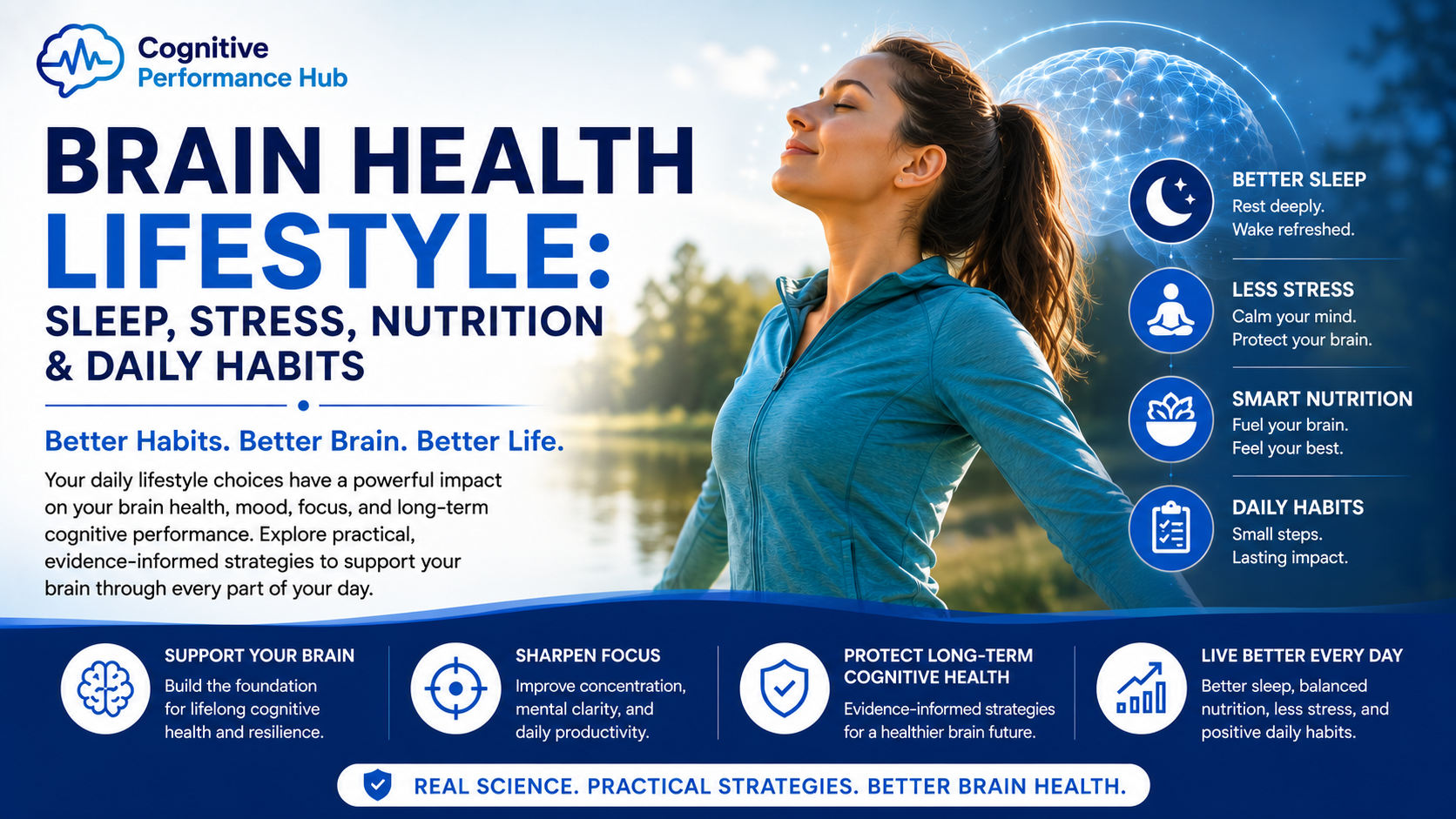
Brain health is not shaped by one “superfood,” one supplement, or one perfect morning routine. It is shaped by patterns. Sleep quality, stress load, food choices, physical activity, social connection, and the way you manage your overall health can all influence how clearly you think now and how well your brain functions over time. Large research reviews and National Institute on Aging guidance both point to lifestyle as one of the most important modifiable areas for supporting long-term cognitive health.
This does not mean lifestyle guarantees protection from cognitive decline, and it does not mean every lapse in focus or memory is a sign of something serious. It does mean that everyday habits create the foundation your brain depends on. If you want better concentration, fewer energy crashes, improved mental resilience, and stronger long-term brain support, lifestyle is the first place to start. That is also why this page connects closely with our guides on Focus & Mental Clarity, Brain Fog, Memory & Cognitive Function, Healthy Cognitive Aging, and Brain Supplements.
Why Lifestyle Matters for Brain Health
The foundation of cognitive health
Your Brain Responds to Daily Patterns
Brain health is influenced by repeated inputs such as sleep, blood flow, nutrition, recovery, movement, social connection, and management of chronic health risks.
Better Daily Performance
Stronger habits may support steadier energy, clearer thinking, improved concentration, better mood, and fewer avoidable cognitive crashes.
Long-Term Risk Reduction
Lifestyle also matters because blood pressure, diabetes, obesity, smoking, poor sleep, depression, and social isolation can affect cognitive health over time.
No lifestyle guarantees protection from cognitive decline, but daily habits create the environment in which the brain has to function.
Sleep and Brain Health
Sleep Is One of the Brain’s Most Important Inputs
Poor sleep can show up as slower thinking, distractibility, irritability, low motivation, reduced memory, and the mental cloudiness many people describe as brain fog.
Speak with a clinician if you regularly snore loudly, wake gasping, feel unrefreshed despite enough time in bed, or struggle with persistent insomnia.
Stress and Cognitive Function
The Goal Is Recovery, Not a Stress-Free Life
Short-term stress can sharpen attention, but chronic stress can contribute to poor concentration, forgetfulness, irritability, sleep disruption, and mental fatigue.
Reduce Total Load
Limit unnecessary multitasking, constant notifications, excessive commitments, and work that never fully switches off.
Build Daily Recovery
Use walking, breathing, prayer, mindfulness, stretching, journalling, quiet time, or a calmer transition into the evening.
Persistent low mood, panic, severe sleep disruption, or ongoing difficulty functioning should be addressed with appropriate medical or mental health care.
Nutrition for a Healthier Brain
Think in patterns
A Brain-Supportive Diet Does Not Need to Be Extreme
The strongest practical approach is a consistent, nutrient-dense eating pattern rather than chasing individual “brain foods” or miracle ingredients.
No single food can prevent dementia, and no single diet “cures” poor concentration. Over time, however, a more nutrient-dense, cardiometabolic-friendly eating pattern gives the brain a better environment in which to function. That is why nutrition belongs in any serious conversation about memory and cognitive function and healthy cognitive aging.
Daily Habits That Support Long-Term Brain Health
The highest-value habits are usually the ones that support several systems at the same time.
Move Regularly
Walking, cycling, swimming, gardening, resistance training, and bodyweight exercise support sleep, mood, circulation, and metabolic health. The World Health Organization recommends at least 150 minutes of moderate-intensity activity each week , or 75 minutes of vigorous activity, plus muscle-strengthening work on two or more days. A repeatable movement routine can also be one of the highest-return starting points for improving focus and mental clarity .
Stay Socially and Mentally Engaged
Conversation, volunteering, classes, hobbies, learning, and meaningful relationships help reduce isolation and keep the brain actively involved. Guidance from the National Institute on Aging highlights the importance of staying socially connected because loneliness and social isolation are associated with poorer health and cognitive outcomes.
Protect Vascular and Metabolic Health
Blood pressure, blood sugar, cholesterol, hearing, vision, smoking, alcohol, medications, and fall risk all connect to long-term cognitive health. The National Institute on Aging recommends managing physical and cardiovascular health risks as part of supporting cognitive function and healthy aging.
Use Supplements Carefully
Supplements should not replace sleep, balanced nutrition, movement, stress care, or proper medical evaluation. The FDA states that dietary supplements are not intended to diagnose, treat, cure, or prevent disease , and combining supplements with medications can sometimes be dangerous . Explore the topic further in our Brain Supplements pillar .
A Simple Brain Health Lifestyle Framework
Five Repeatable Brain-Health Actions
Start with the habits you can repeat consistently rather than trying to perfect everything at once.
Small improvements done consistently usually outperform extreme routines that become difficult to sustain.
When to Seek Medical Advice
Do Not Assume Every Cognitive Change Is Caused by Lifestyle
Speak with a healthcare professional if you notice significant, persistent, or worsening changes in memory, concentration, language, reasoning, mood, sleep, or everyday functioning.
- Memory or concentration problems are becoming more frequent
- Symptoms interfere with work, driving, finances, medication management, or daily tasks
- Changes began after an illness, head injury, or medication change
- Persistent depression, anxiety, insomnia, or possible sleep apnoea is affecting daily life
- Family members have noticed meaningful changes in behaviour, judgement, or functioning
Sudden confusion, facial drooping, weakness on one side, difficulty speaking, severe headache, chest pain, collapse, or loss of consciousness requires urgent medical attention.
Conclusion
A strong brain health lifestyle is built on the basics done well: quality sleep, better stress regulation, smarter nutrition, regular movement, social connection, and attention to the health conditions that can quietly undermine cognition. None of these habits needs to be perfect, but together they create the environment your brain relies on for focus, memory, resilience, and long-term function.
If you want the broader roadmap, start with the Brain Health Guide. If your immediate challenge is day-to-day concentration, continue with Focus & Mental Clarity. If you are dealing with ongoing mental fatigue, read Brain Fog. And if your priority is preserving function over time, visit Healthy Cognitive Aging.
FAQ
1. What is a brain health lifestyle?
A brain health lifestyle is a pattern of daily habits that supports cognitive function over time. It usually includes good sleep, stress management, nutritious eating, physical activity, social connection, and management of health conditions that can affect the brain.
2. How much sleep do adults need for brain health?
Most adults, including older adults, generally need seven to nine hours of sleep each night. Consistency also matters, so regular sleep and wake times can be just as important as the total number of hours.
3. Can chronic stress affect memory and focus?
Yes. Persistent stress has been associated with attention problems, mental fatigue, and poorer cognitive outcomes over time. Building recovery habits into your day can help reduce the load stress places on the brain.
4. What kind of diet is best for brain health?
There is no single perfect brain diet, but research often points toward balanced eating patterns rich in vegetables, fruits, whole grains, legumes, healthy fats, and quality protein sources. Mediterranean-style and MIND-style patterns are commonly discussed in brain-health research.
5. Does exercise help cognitive function?
Regular physical activity supports overall health and may also help cognitive health. WHO recommends at least 150 minutes of moderate activity per week for adults, and NIA notes that exercise can improve sleep, reduce anxiety, and support long-term physical health.
6. Do supplements replace healthy lifestyle habits?
No. Supplements do not replace sleep, nutrition, movement, stress care, or medical evaluation. The FDA states that dietary supplements are not intended to diagnose, treat, cure, or prevent disease, and some can interact dangerously with medications.
7. Can social connection really affect brain health?
Yes. Social isolation and loneliness have been associated with cognitive decline and other negative health outcomes. Staying socially engaged is one of the practical habits linked with healthier aging and better resilience.
8. Is occasional forgetfulness always a warning sign?
No. Some forgetfulness can be a normal part of aging. But noticeable or worsening changes, especially if they affect daily functioning, should be discussed with a doctor.
9. What are the best first lifestyle changes to make?
The best first steps are the ones you can repeat. For most people, improving sleep timing, walking daily, eating more consistently, reducing stress overload, and booking overdue health checks are strong starting points.
10. When should I seek medical advice for brain-related symptoms?
You should seek medical advice if memory, mood, focus, language, or daily functioning are noticeably worsening, or if symptoms appear suddenly. Persistent sleep issues, depression, confusion, or significant changes in thinking should also be assessed.
Build a Smarter Brain Health Foundation
Better brain performance starts with better daily inputs. Explore the full hub, follow the complete brain health guide, or learn how memory, focus, and long-term cognitive support fit together.
Evidence and further reading
Sources and References
This page was developed using guidance and research from established public-health and medical authorities.
- Cognitive Health and Older Adults National Institute on Aging
- Healthy Lifestyle Linked With Better Cognitive Function in Older Adults National Institute on Aging
- About Sleep: Benefits, Quality and Healthy Sleep Habits Centers for Disease Control and Prevention
- Relaxation Techniques: What You Need to Know National Center for Complementary and Integrative Health
- Physical Activity Recommendations for Adults World Health Organization
- Loneliness and Social Isolation National Institute on Aging
- Questions and Answers on Dietary Supplements U.S. Food and Drug Administration
- Mixing Medications and Dietary Supplements Can Endanger Your Health U.S. Food and Drug Administration

Medically Reviewed for Accuracy
This content has been reviewed for accuracy and clarity by the Cognitive Performance Hub Medical Review Team, using current research and evidence-based guidelines.
Our review process ensures that information related to brain health, cognitive performance, and wellness strategies aligns with current scientific understanding and best practices.
Written by Cognitive Performance Hub Editorial Team
Our editorial team consists of health researchers and writers specializing in brain health, cognitive performance, and evidence-based wellness strategies.
We create clear, research-informed content designed to help readers improve focus, enhance memory, reduce brain fog, and support long-term cognitive health.
Brain Health Safety Note
This content is for educational purposes only and should not be used as a substitute for medical advice, diagnosis, or treatment.
If you are experiencing significant memory problems, confusion, sudden cognitive changes, neurological symptoms, or concerns about brain health, speak with a qualified healthcare professional promptly.
Never delay seeking medical advice because of something you read on this site.