Part of the Brain Health Lifestyle pillar and the Brain Health Hub. For a broader overview, visit the Brain Health Guide.
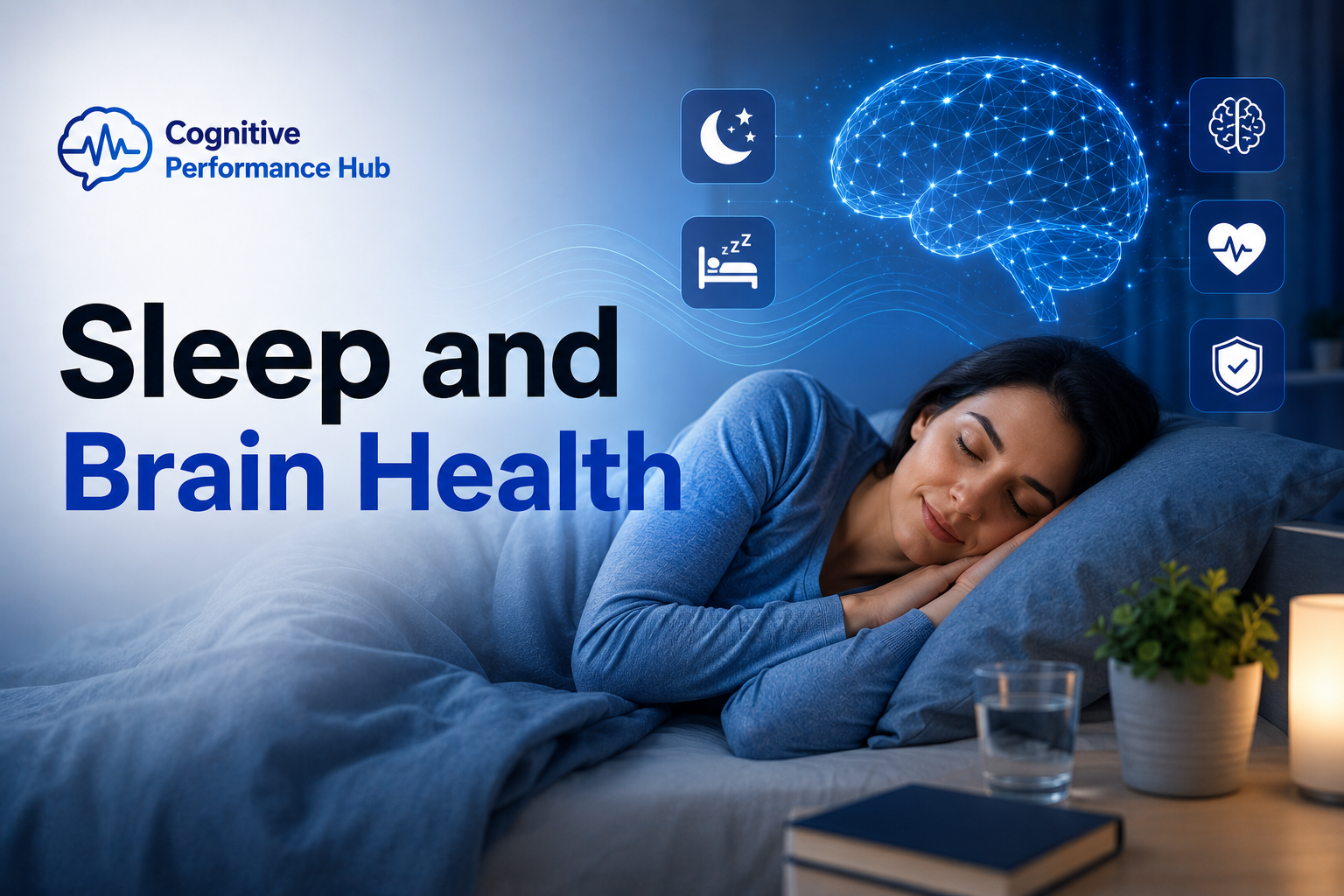
Sleep is one of the most important daily foundations for brain health. It is not just a time when the body “switches off.” During sleep, the brain is actively supporting learning, memory, attention, emotional regulation, and next-day functioning. The National Institute on Aging says that sleep affects your ability to function during the day and that a good night’s sleep can help you learn, create new memories, respond quickly, solve problems, pay attention, make decisions, and be creative.
That is why poor sleep often shows up first as a brain issue before people think of it as a health issue. You may notice lower concentration, more forgetfulness, slower thinking, irritability, mental fatigue, or the “foggy” feeling that makes ordinary tasks feel harder than they should. NHLBI notes that sleep deficiency can interfere with work, school, driving, and social functioning, and can make it harder to focus, react, solve problems, remember things, and manage emotions and behavior.
Sleep also fits directly into the wider cognitive-health picture. NIA defines cognitive health as the ability to think, learn, and remember clearly, and notes that lifestyle factors can support brain function now and in the future. That is one reason sleep belongs alongside Focus & Mental Clarity, Brain Fog, Memory & Cognitive Function, and Healthy Cognitive Aging.
Why Sleep Matters for Brain Health
Sleep supports healthy brain function in several ways. NHLBI states that while you are sleeping, your brain is getting ready for the next day and forming new pathways to help you learn and remember information. NIA also notes that both REM and non-REM sleep help you store memories.
This helps explain why sleep loss can feel so mentally disruptive even after only a short period of poor rest. When sleep quality drops, people often find that they need more effort to stay on task, make more mistakes, take longer to complete work, and feel less emotionally steady. NHLBI says sleep deficiency can slow reaction time and make decision-making, problem-solving, and coping with change more difficult.
Sleep is also closely tied to mood and resilience. CDC says getting enough sleep can reduce stress and improve mood, while NIA notes that lack of quality sleep can lead to negative feelings and more stress in relationships. This is one reason poor sleep and high stress often reinforce each other. If your sleep is off, your brain is usually less resilient the next day.
How Poor Sleep Can Affect Focus, Memory, and Mental Clarity
One of the clearest links between sleep and brain health is attention. CDC says enough sleep can improve attention and memory for daily activities. When sleep is disrupted, attention tends to become less stable. You may drift more easily, reread things without absorbing them, or struggle to stay mentally present in conversations or work.
Memory can also suffer when sleep is inadequate. NIA says lack of quality sleep can lead to problems with memory, and both NIA and NHLBI describe sleep as important for learning and memory formation. In everyday life, that may feel like forgetting details, losing your train of thought, or needing more repetition before information sticks.
Mental clarity is often affected through multiple pathways at once. Poor sleep can reduce attention, increase irritability, worsen stress tolerance, and leave you feeling unrefreshed even if you spent enough hours in bed. CDC defines quality sleep as uninterrupted and refreshing sleep, not just a certain number of hours. That distinction matters because someone can spend plenty of time in bed and still wake up mentally dull if sleep quality is poor.
This overlap is one reason sleep problems commonly show up in people dealing with brain fog. Sleep is not the only cause of brain fog, but it is one of the most common and most practical places to look first when concentration, recall, and mental energy begin to slip.
How Much Sleep Do You Need?
NIA says older adults need about the same amount of sleep as all adults: seven to nine hours each night. It also notes that older adults often go to sleep earlier and wake earlier than they did when they were younger. The main goal is not to chase a perfect schedule, but to get enough sleep and wake feeling restored and alert.
Quantity matters, but quality matters too. CDC says quality sleep means getting uninterrupted and refreshing sleep. Signs of poor sleep quality include trouble falling asleep, waking repeatedly during the night, and feeling sleepy or tired even after getting enough sleep.
Sleep Quality vs. Sleep Quantity
It is possible to get the “right” number of hours and still feel poorly rested. That is why sleep and brain health should not be reduced to a single number. If sleep is fragmented, shallow, mistimed, or interrupted by snoring, breathing problems, pain, or restless legs, brain function can still suffer. CDC specifically distinguishes sleep quality from sleep duration and lists common signs of poor-quality sleep.
NIA also notes that as people age, sleep tends to become shorter and lighter, and older adults may wake more often during the night. Medical conditions, medications, pain, and sleep disorders also become more common with age. This makes sleep quality especially relevant when thinking about healthy cognitive aging.
Common Signs Your Sleep May Be Affecting Your Brain
Your sleep may be affecting your brain health if you notice:
- trouble focusing for long periods
- slower reaction time
- forgetting everyday details
- feeling mentally drained early in the day
- reduced patience or emotional control
- waking tired even after a full night in bed
- needing more caffeine just to function normally
- feeling sleepy during quiet daytime activities
These symptoms do not automatically mean something serious is wrong, but they are strong clues that sleep deserves attention. NHLBI says people who are sleep deficient may feel like they could doze off during common daytime situations and may have trouble finishing tasks, make more mistakes, and take longer to do things.
Sleep, Aging, and Long-Term Brain Health
Sleep becomes even more important in the context of aging because brain health is shaped by routine, physical health, and recovery over time. NIA says lifestyle changes can support brain function now and in the future, and it includes sleep within broader guidance on maintaining cognitive health.
NIA also notes that lack of quality sleep can increase the risk of falls or accidents and contribute to negative feelings and memory problems. That matters because sleep problems rarely stay isolated. They can affect confidence, routine, physical activity, stress levels, and social engagement, all of which influence quality of life and day-to-day thinking.
Practical Ways to Improve Sleep for Better Brain Function
Keep a Consistent Sleep Schedule
CDC recommends going to bed and getting up at the same time every day. NIA gives similar advice and says to follow a regular schedule, even on weekends or when traveling. Consistency helps align sleep with the body’s internal timing systems, which can make it easier to fall asleep and wake more predictably.
Make the Bedroom More Sleep-Friendly
CDC recommends keeping your bedroom quiet, relaxing, and at a cool temperature. These small environmental changes can have an outsized effect when poor sleep is being driven by overstimulation, light exposure, or fragmented rest.
Reduce Evening Stimulation
CDC advises turning off electronic devices at least 30 minutes before bedtime and avoiding large meals and alcohol before bed. It also recommends avoiding caffeine in the afternoon or evening. These changes can help reduce some of the common habits that interfere with sleep onset or sleep quality.
Exercise and Maintain Healthy Daily Habits
CDC includes regular exercise and a healthy diet among habits that can improve sleep. This is one reason the sleep conversation fits naturally inside your wider Brain Health Lifestyle foundation rather than standing alone. Better sleep is usually supported by better overall routine.
Pay Attention to Sleep Quality, Not Just Time in Bed
If you spend enough time in bed but still wake unrefreshed, repeatedly wake during the night, or feel sleepy through the day, focus on sleep quality rather than assuming “more hours” is the only answer. CDC highlights interrupted sleep and persistent tiredness as signs of poor sleep quality.
When Sleep Problems May Point to a Sleep Disorder
Sometimes poor brain function related to sleep is not just about habits. It may reflect a sleep disorder. CDC lists insomnia, restless legs syndrome, narcolepsy, and sleep apnea among common sleep disorders, and advises talking to a healthcare provider if you regularly have trouble sleeping or notice signs of a sleep disorder.
Sleep apnea deserves special attention because it can quietly undermine sleep quality for a long time. NHLBI says sleep apnea occurs when breathing stops and restarts many times during sleep, which can prevent the body from getting enough oxygen. It says people should talk with a provider if someone tells them they snore or gasp during sleep, or if they have symptoms such as excessive daytime sleepiness. NIA also advises talking to a doctor if you suspect sleep apnea.
When to Seek Medical Advice
It is worth speaking with a healthcare professional if you regularly have problems sleeping, feel persistently sleepy during the day, wake unrefreshed, or notice warning signs such as loud snoring, gasping, pauses in breathing, or significant concentration and memory problems. CDC says providers may use sleep studies and may ask you to keep a sleep diary that tracks bedtime, wake-ups, naps, exercise, alcohol or caffeine intake, and medications.
That matters because sleep problems are often treatable, and better diagnosis can make a major difference to cognitive symptoms. NIA says that practicing better sleep habits and getting diagnosed and treated if you have a sleep disorder may help improve your sleep.
Conclusion
Sleep and brain health are tightly connected. Good sleep supports attention, memory, learning, decision-making, emotional balance, and day-to-day mental clarity. Poor sleep can make it harder to focus, remember, react, regulate emotions, and function at your best. Official guidance from NIA, CDC, and NHLBI consistently treats sleep as a core part of overall health and healthy brain function.
If sleep is one of your main struggles, it is often one of the highest-return areas to improve first. Continue with the Brain Health Lifestyle pillar, read Stress and Brain Function, or explore Brain Fog if poor rest is showing up as mental cloudiness. For the broader roadmap, visit the Brain Health Guide.
Related Articles
- Brain Health Lifestyle: Sleep, Stress, Nutrition & Daily Habits
- Stress and Brain Function
- Brain Fog: Causes, Symptoms & How to Clear It
- Focus & Mental Clarity
- Memory & Cognitive Function
- Healthy Cognitive Aging
- Brain Health Guide
FAQ
What does sleep do for brain health?
Sleep supports healthy brain function, including learning, memory, attention, decision-making, and next-day mental performance. NIA and NHLBI both describe sleep as important for memory storage and learning pathways.
Can poor sleep affect memory?
Yes. NIA says lack of quality sleep can lead to memory problems, and NHLBI says sleep helps form pathways that support learning and remembering information.
Can lack of sleep cause brain fog?
Poor sleep can contribute to brain fog because it affects attention, reaction time, memory, mood, and mental clarity.
How many hours of sleep do adults need?
NIA says adults, including older adults, generally need seven to nine hours of sleep each night.
Is sleep quality different from sleep quantity?
Yes. CDC says quality sleep means getting uninterrupted and refreshing sleep, not just spending enough hours in bed.
What are signs that poor sleep is affecting brain function?
Common signs include trouble concentrating, slower thinking, forgetfulness, irritability, daytime sleepiness, and feeling unrefreshed after sleep.
What are the best sleep habits for brain health?
CDC recommends going to bed and waking up at the same time every day, keeping the bedroom quiet and cool, turning off devices before bed, avoiding late caffeine and large meals, and exercising regularly.
Can sleep apnea affect cognitive function?
It can. NHLBI says sleep apnea involves repeated breathing interruptions during sleep and can lead to poor sleep quality and daytime sleepiness, which may affect how you feel and function.
When should I talk to a doctor about sleep problems?
CDC says you should talk to a healthcare provider if you regularly have trouble sleeping or notice signs of a common sleep disorder. NIA also advises medical review if you are always sleepy or find it hard to get enough sleep.
Can improving sleep help focus and mental clarity?
Better sleep can support attention, memory, mood, and daily cognitive performance, so improving sleep often helps focus and mental clarity as well.
Improve Sleep, Support Your Brain
Better sleep can support memory, focus, mood, and mental clarity. Explore the full lifestyle pillar, read more about stress and brain function, or return to the main brain health hub for your next step.
Medically Reviewed for Accuracy
This content has been reviewed for accuracy and clarity by the Cognitive Performance Hub Medical Review Team, using current research and evidence-based guidelines.
Our review process ensures that information related to brain health, cognitive performance, and wellness strategies aligns with current scientific understanding and best practices.
Written by Cognitive Performance Hub Editorial Team
Our editorial team consists of health researchers and writers specializing in brain health, cognitive performance, and evidence-based wellness strategies.
We create clear, research-informed content designed to help readers improve focus, enhance memory, reduce brain fog, and support long-term cognitive health.
Brain Health Safety Note
This content is for educational purposes only and should not be used as a substitute for medical advice, diagnosis, or treatment.
If you are experiencing significant memory problems, confusion, sudden cognitive changes, neurological symptoms, or concerns about brain health, speak with a qualified healthcare professional promptly.
Never delay seeking medical advice because of something you read on this site.
Affiliate Transparency
Some pages on Cognitive Performance Hub may include affiliate links. If you choose to make a purchase through one of these links, we may earn a small commission at no extra cost to you.
Our editorial content is created independently and is designed to prioritize clarity, evidence-informed information, and reader value.