Part of the Brainwave Entrainment pillar in the Brain Health Hub.
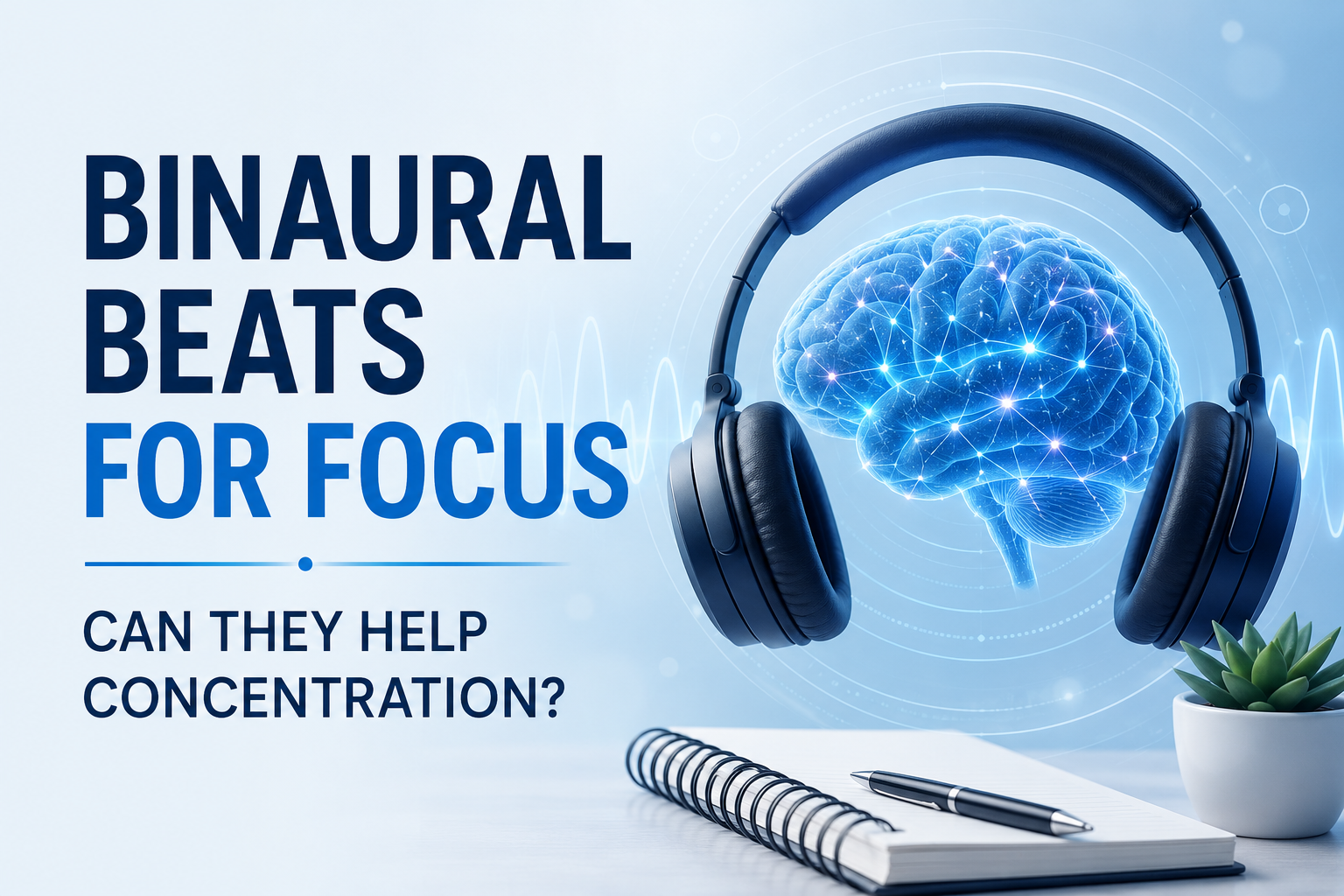
Binaural beats for focus are audio tracks designed to support concentration, steady attention, and mental clarity during tasks like studying, reading, writing, or deep work. Many people try them because they want a simple, non-invasive way to create a more focused mental environment.
The idea is straightforward. Binaural beats use two slightly different tones, one in each ear, and the brain may perceive the difference between them as a rhythmic beat. Some focus-oriented tracks are built around faster beat ranges often marketed for alertness, concentration, or cognitive performance.
The most realistic way to think about binaural beats for focus is this: they may help some people settle into a task, reduce mental drift, or create a more structured listening environment, but they are not a guaranteed concentration shortcut and they do not replace the basics of good focus.
Related Page: What Are Binaural Beats and How Do They Work?
What Are Binaural Beats for Focus?
Binaural beats for focus are usually audio tracks designed for mentally active tasks rather than sleep or deep relaxation. They are often marketed toward students, knowledge workers, writers, and anyone trying to stay on one task for longer without constant distraction.
Some tracks are very minimal, using mostly tones and subtle background audio. Others layer the beats under music, ambient textures, or white noise. The main goal is not to force concentration, but to create a sound environment that may feel more conducive to staying on task.
How Binaural Beats May Support Concentration
Binaural beats do not “install” focus into the brain, but they may help some people create a more stable and task-friendly mental environment.
- Provide a steady background sound that may reduce mental wandering
- Make work sessions feel more structured and intentional
- Reduce the urge to switch between multiple forms of stimulation
- Act as a routine cue that it is time to concentrate
- Help some listeners stay with one task longer
What the Research Says About Binaural Beats and Focus
The research is interesting, but not clean enough to justify exaggerated claims.
A 2023 meta-analysis and systematic review found an overall medium effect size for binaural beat interventions on attention and memory, but also reported conflicting findings in the underlying literature, especially around which beat ranges worked best for which cognitive tasks.
If you want one external source inside the article, see this meta-analysis and systematic review on binaural beats, attention, and memory.
A newer 2025 study looking specifically at sustained attention found that some gamma-frequency binaural beat conditions improved general attention performance, but they did not eliminate the normal decline in vigilance over time. That matters because it suggests the effects may be modest, parameter-dependent, and not universally reliable.
You can review that study here: A parametric investigation of binaural beats for brain entrainment and enhancing sustained attention.
The practical takeaway is simple: binaural beats may help some people focus, but the evidence is mixed enough that they should be treated as a support tool, not a proven cognitive upgrade.
Which Binaural Beats Are Commonly Used for Focus?
Focus tracks are often marketed around beta or gamma-style beat ranges because those are commonly associated with active thinking, alertness, and cognitively demanding work.
That does not mean one specific frequency is the “best” for everyone. A lot of online marketing makes focus audio sound much more exact and certain than it really is.
If you’re looking for ready-made focus recordings rather than experimenting with individual frequencies, our guide to the Best Brain Audio Programs for Focus, Sleep & Relaxation compares several dedicated platforms designed specifically for concentration, productivity and learning.
A more realistic approach is to think in terms of how the track feels in practice:
- Does it help you settle into the task?
- Does it stay in the background rather than pulling attention away?
- Does it feel mentally supportive rather than irritating?
Related Page: Brain Waves Explained: Alpha, Beta, Theta, Delta and Gamma
Do You Need Headphones for Focus Binaural Beats?
Usually, yes.
Binaural beats work best when each ear receives a slightly different tone. That is why stereo headphones or earbuds are usually recommended. Without that left-right separation, the intended binaural effect may be reduced or lost.
Related Page: Do You Need Headphones for Binaural Beats?
When Binaural Beats for Focus May Be Most Useful
Binaural beats may work best when the main challenge is settling into a task without constant internal or external distraction.
May Be Worth Trying If You:
- Struggle to get started on mentally demanding work
- Like working with background audio
- Need a routine cue for deep work
- Find silence uncomfortable during study or reading
- Prefer a more structured sound environment than random playlists
May Be Less Helpful If You:
- Are easily irritated by repetitive sounds
- Need complete silence to think clearly
- Expect dramatic or instant results
- Are trying to override sleep debt, burnout, or high stress with audio alone
How to Use Binaural Beats for Focus
If you want to test binaural beats for concentration, keep the process simple and practical.
- Use them during a defined work block rather than while passively multitasking.
- Start with a short session of about 15 to 30 minutes.
- Keep the volume moderate so the audio feels supportive, not tiring.
- Use headphones if possible to preserve the stereo separation.
- Choose one task before you start so the track supports a clear purpose.
- Pay attention to your response and stop if the track feels irritating or distracting.
Looking for more structured brain audio?
Once you’ve tested basic binaural beats, you may wish to explore dedicated brain audio platforms that offer structured focus sessions, productivity programs and study-specific recordings. Our guide compares several popular options—including Brainwave Shots, Subliminal Guru and Inspire3 Gifts—to help you choose the best fit for your goals.
Related Page: How Long Should You Listen to Binaural Beats?
Recommended Next Step
Looking Beyond Basic Binaural Beats?
Many people begin by experimenting with free binaural beats on YouTube or streaming platforms. If you enjoy using brain audio and want programs designed for more specific goals, dedicated brain audio platforms may be worth exploring.
Some programs focus on concentration, studying, productivity, meditation, relaxation, or sleep. Others combine brainwave audio with guided sessions, ambient soundscapes, or subliminal messaging.
Best for trying brainwave entrainment and free brainwave audio sessions.
Best for targeted goals like focus, studying, productivity and sleep.
Best for free personal development audio and mindset resources.
Can Binaural Beats Replace Good Focus Habits?
No.
Even if binaural beats help you a little, they cannot replace the main foundations of concentration. Focus still depends on things like:
- Sleep quality
- Task clarity
- Reduced interruptions
- Hydration
- Energy management
- Screen boundaries
- Reasonable stress levels
If those basics are poor, the effect of any audio tool is likely to be limited.
Related Page: Brain Health Lifestyle: Sleep, Stress, Nutrition & Daily Habits
Looking Beyond Basic Binaural Beats?
Many people begin by experimenting with free binaural beats on YouTube or streaming platforms. If you enjoy using brain audio and want programs designed for more specific goals, there are also dedicated brain audio platforms worth exploring.
Some combine binaural beats with other audio techniques such as isochronic tones, guided sessions, ambient soundscapes, or subliminal messaging. Others focus on particular outcomes such as studying, productivity, creativity, sleep, meditation, or stress reduction.
If you’re comparing your options, we’ve reviewed some of the most popular brain audio platforms and free resources in our complete guide.
📘 Recommended Guide
Best Brain Audio Programs for Focus, Sleep & Relaxation →
Inside the guide you’ll discover:
- 🎧 A comparison of Brainwave Shots, Subliminal Guru, and Inspire3 Gifts
- 🧠 Which program is best suited for focus, studying, productivity, meditation, relaxation, and sleep
- 🎁 The best free brain audio resources available for beginners
- ✅ Which platforms may suit different listening styles and personal goals
Whether you’re simply curious or looking for a structured brain audio program, this comparison can help you choose the option that best matches your goals.
Binaural Beats for Focus vs Music
Some people compare binaural beats with instrumental music, lo-fi playlists, white noise, or nature sounds. There is no universal winner.
Binaural beats may suit people who want a more structured and minimal type of background audio. Music may suit people who need something more pleasant and less technical. White noise may suit people who mainly want environmental masking rather than a focus cue.
The better choice is the one that helps you stay on the task without becoming another distraction.
Are Binaural Beats for Focus Safe?
For many healthy adults, binaural beats are generally low risk when used at a comfortable volume and for sensible session lengths. The main practical concern is the same as with any headphone-based audio: safe listening habits matter.
WHO’s safe-listening guidance says to keep device volume below 60% of maximum. A simple overview is available here: WHO safe listening guidance.
Stop using the track if it consistently causes headaches, agitation, dizziness, ear fatigue, or worse concentration.
Related Page: Are Binaural Beats Safe? Benefits, Risks and What to Know
What If Binaural Beats Make Focus Worse?
That can happen. Some people find repetitive audio too noticeable, too artificial, or simply distracting. If that is your experience, it does not mean you are doing anything wrong—it may just mean this format is not the right fit for your attention style.
You may do better with:
- Silence
- Instrumental music
- Nature sounds
- White noise
- Timed focus blocks without audio
Another option to consider:
Some listeners find they respond better to professionally produced brain audio programs that combine multiple techniques rather than simple binaural tones alone. These may include guided audio sessions, ambient soundscapes, isochronic tones, or subliminal messaging alongside brainwave-based audio.
Our comparison guide explains the differences between several popular brain audio platforms to help you find the approach that best matches your focus and productivity goals.
Final Thoughts
Binaural beats for focus may help some people create a steadier and more structured work environment, especially during reading, studying, writing, or deep work. But they are not a guaranteed concentration shortcut, and the current research does not support overblown claims.
The best way to use them is simply: keep expectations realistic, use headphones, keep the volume moderate, start with a short session, and judge the track by whether it genuinely helps you stay on task.
For the bigger picture, continue with the full Brainwave Entrainment pillar or return to the Brain Health Hub.
FAQs
Can binaural beats help with focus?
They may help some people concentrate by creating a more structured and less distracting listening environment, but results vary and they do not work the same way for everyone.
Do binaural beats improve concentration?
They may support concentration for some listeners, but the research is mixed and the effects appear to depend on the person, the track, and the task.
What type of binaural beats are used for focus?
Focus tracks are often marketed around beta or gamma-style beat ranges, but there is no single best option that works for everyone.
Do you need headphones for binaural beats for focus?
Usually, yes. Headphones help deliver separate tones to each ear, which is important for the binaural effect.
How long should you listen to binaural beats for focus?
A short session of about 15 to 30 minutes is a sensible place to start. You can adjust based on comfort and usefulness.
Are binaural beats better than music for focus?
Not necessarily. Some people prefer binaural beats, while others focus better with silence, instrumental music, or white noise.
Can binaural beats replace good study habits?
No. They may support a routine, but they do not replace sleep, task clarity, reduced distractions, hydration, or stress management.
What if binaural beats distract me?
If they make concentration worse, stop using them. Another audio style or no audio at all may suit you better.
Are binaural beats safe to use while working?
For many people they are generally low risk at a comfortable volume, but they should not be used in situations where full environmental awareness is essential.
Do binaural beats work instantly?
Usually not. They are more realistically used as a support tool for a focus routine rather than an instant concentration switch.
Next Step
Want to Explore More Than Binaural Beats?
If binaural beats have helped you focus, you may also be interested in dedicated brain audio platforms for concentration, studying, productivity, meditation, relaxation and sleep.
Compare Brain Audio Programs →References
-
Basu S, Banerjee B. Potential of binaural beats intervention for improving memory and attention: insights from meta-analysis and systematic review.
https://link.springer.com/article/10.1007/s00426-022-01706-7 -
Melnichuk A, Cooper RK Jr, Hawk LW Jr. A parametric investigation of binaural beats for brain entrainment and enhancing sustained attention.
https://www.nature.com/articles/s41598-025-88517-z -
World Health Organization (WHO) — Deafness and hearing loss: Safe listening
https://www.who.int/news-room/questions-and-answers/item/deafness-and-hearing-loss-safe-listening
Medically Reviewed for Accuracy
This content has been reviewed for accuracy and clarity by the Cognitive Performance Hub Medical Review Team, using current research and evidence-based guidelines.
Our review process ensures that information related to brain health, cognitive performance, and wellness strategies aligns with current scientific understanding and best practices.
Written by Cognitive Performance Hub Editorial Team
Our editorial team consists of health researchers and writers specializing in brain health, cognitive performance, and evidence-based wellness strategies.
We create clear, research-informed content designed to help readers improve focus, enhance memory, reduce brain fog, and support long-term cognitive health.
Brain Health Safety Note
This content is for educational purposes only and should not be used as a substitute for medical advice, diagnosis, or treatment.
If you are experiencing significant memory problems, confusion, sudden cognitive changes, neurological symptoms, or concerns about brain health, speak with a qualified healthcare professional promptly.
Never delay seeking medical advice because of something you read on this site.
Affiliate Transparency
Some pages on Cognitive Performance Hub may include affiliate links. If you choose to make a purchase through one of these links, we may earn a small commission at no extra cost to you.
Our editorial content is created independently and is designed to prioritize clarity, evidence-informed information, and reader value.