
Part of the Brainwave Entrainment pillar in the Brain Health Hub.
The short answer is usually yes. If you want the full binaural beat effect, headphones are generally recommended because each ear needs to receive a slightly different tone.
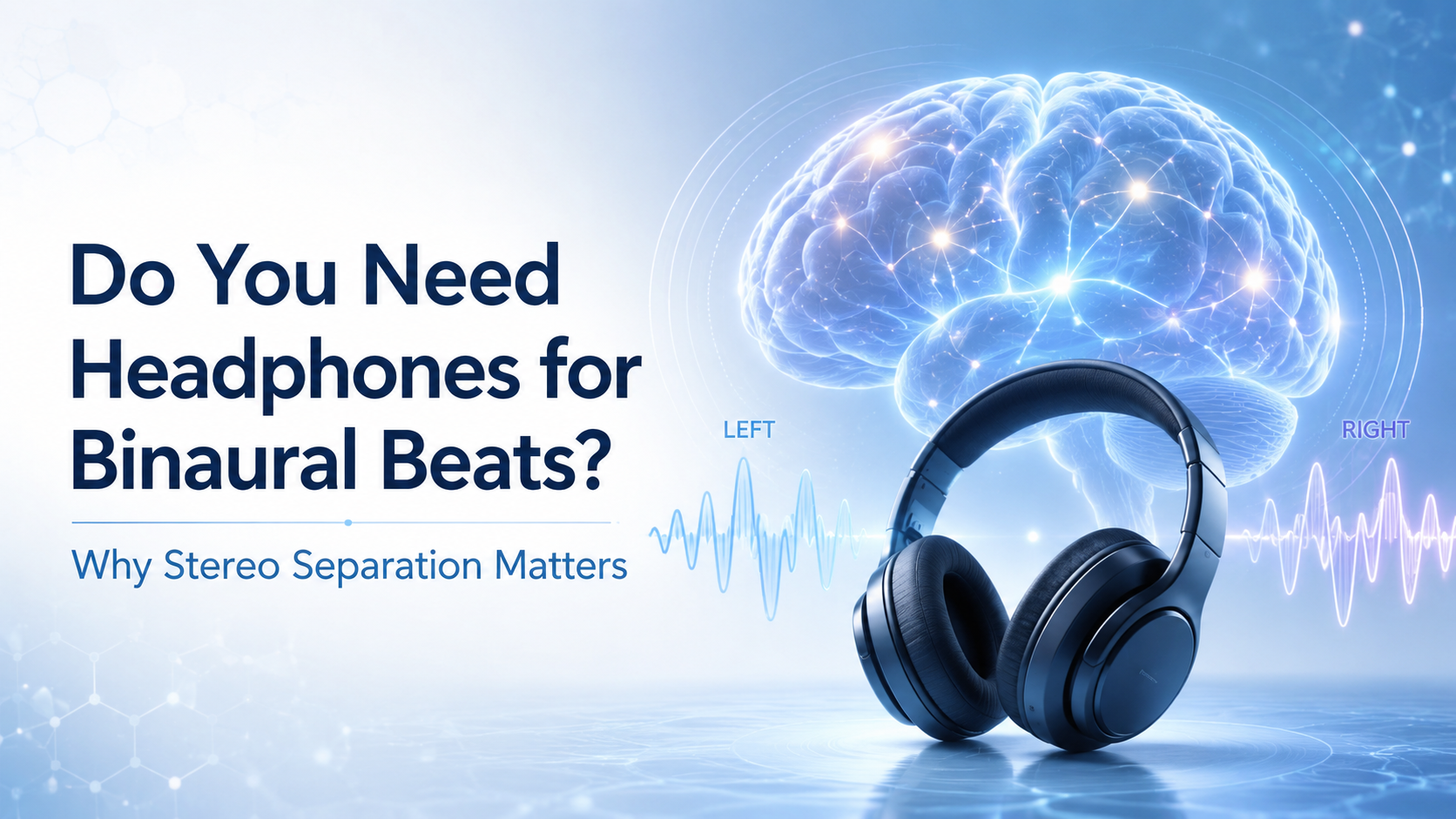
Binaural beats work by sending one frequency to one ear and a nearby frequency to the other. The brain may then perceive the difference between those tones as a rhythmic beat. That means left-right separation matters. If the sound blends together too early through speakers, the effect may be reduced or lost.
This is one of the biggest practical differences between binaural beats and other audio tools such as isochronic tones. Binaural beats are usually headphone-dependent, while some other rhythmic audio formats are not.
Related Page: What Are Binaural Beats and How Do They Work?
Why Headphones Are Usually Needed
Binaural beats depend on each ear receiving a different tone. For example, one ear may hear 200 Hz while the other hears 210 Hz. The brain may then interpret the difference, in this case 10 Hz, as a perceived beat.
If both ears hear both tones at the same time in the same way, the intended binaural effect becomes much less precise. That is why stereo headphones or earbuds are usually recommended.
In simple terms, headphones help preserve the left-right separation that binaural beats rely on.
What Happens If You Play Binaural Beats Through Speakers?
You can still hear the track, but you may not get the same result.
If you use speakers, the tones can mix together in the room before they reach your ears. That blending may weaken or remove the true binaural effect. You might still find the audio relaxing or pleasant, especially if the track includes ambient sound, music, or nature layers, but the distinct binaural mechanism may not work as intended.
That means people sometimes enjoy binaural beat recordings through speakers, but they are often responding to the overall soundscape rather than a strong binaural effect.
Do Earbuds Work or Do You Need Over-Ear Headphones?
Both can work if they provide proper stereo separation and feel comfortable.
Earbuds can be convenient and may work well for short sessions. Over-ear headphones may feel more immersive for some people and can sometimes be more comfortable for longer focus or relaxation sessions. The better choice is usually the one that:
- Delivers clean left-right stereo audio
- Feels comfortable for the session length
- Does not tempt you to raise the volume too much
- Fits the context, such as work, meditation, or bedtime wind-down
There is no universal winner between earbuds and over-ear headphones. Comfort and volume control matter more than style.
Do You Need Special Headphones?
No, special “brainwave” headphones are not usually necessary.
For most people, ordinary stereo headphones or earbuds are enough. What matters most is that the audio stays clearly separated between left and right channels and that the headphones are comfortable to wear.
Expensive headphones are not required for the basic effect. In many cases, safe volume and a good fit matter more than premium branding or hype-heavy marketing.
Do Noise-Cancelling Headphones Help?
They can help in some situations.
If you are listening in a noisy environment, noise-cancelling headphones may reduce the need to turn the volume up. That can make the session more comfortable and may support safer listening habits.
If you want an external reference for that, the World Health Organization safe listening guidance recommends well-fitted and noise-cancelling headphones when helpful, because they can reduce the urge to increase volume in noisy places.
Can Mono Audio or One-Ear Listening Work?
Not for true binaural beats.
Binaural beats require separate input to each ear. If you listen with only one earbud, a broken channel, mono playback, or an audio system that collapses the stereo separation, the intended binaural effect will not work properly.
If you are unsure whether your setup is stereo, test a track with clear left-right separation before assuming the problem is the binaural beat itself.
Are Headphones Always Necessary for Brainwave Entrainment?
No. They are usually necessary for binaural beats, but not for every type of brainwave entrainment audio.
For example, isochronic tones use a pulsing sound built directly into the audio signal. Because of that, they do not depend on each ear receiving a different tone in the same way.
That is one reason people often compare the two formats when deciding which audio style to try.
Related Page: Isochronic Tones vs Binaural Beats: Key Differences Explained
When Headphones Make the Biggest Difference
Headphones usually matter most when you are using a simple or stripped-back binaural beat track where the actual beat effect is the main feature. The more a track relies on the binaural mechanism itself, the more important headphones become.
They also matter more when:
- You want a stronger left-right separation
- You are trying to use the track for meditation, focus, or sleep preparation
- You are in an environment where speakers would blend sound too much
- You want to test whether binaural beats work for you as intended
When Speakers May Still Be Fine
If your goal is simply to enjoy a calming soundscape, speakers may still be fine. Many “binaural beats” tracks also contain ambient music, nature sounds, or relaxation layers that can still sound pleasant without headphones.
In that situation, the audio may still be enjoyable, but it is better to think of it as general relaxation sound rather than a clean binaural setup.
Can Headphones Make Binaural Beats More Effective?
Usually they make them more technically appropriate, not necessarily magically stronger.
Headphones help the audio work as intended, but they do not guarantee that you will feel more focused, calmer, or sleepier. The response still depends on the person, the track, the setting, the volume, and whether the sound suits the goal.
That means headphones improve the delivery method, but they do not guarantee a dramatic effect.
Headphones and Safe Listening
Because binaural beats are commonly used with headphones or earbuds, hearing safety matters. The main practical risk is usually not the beat itself but listening too loudly or for too long.
In general, safer listening means:
- Keeping the volume moderate
- Avoiding long sessions at high volume
- Taking breaks when needed
- Stopping if you notice ear fatigue, irritation, or discomfort
Related Page: How Long Should You Listen to Binaural Beats?
What If Headphones Feel Uncomfortable?
If headphones or earbuds feel irritating, bulky, or distracting, that matters. Some people stop using binaural beats simply because the listening setup is uncomfortable, especially for sleep or longer sessions.
If that happens, you have a few options:
- Try a shorter session
- Use a more comfortable pair of headphones
- Lower the volume
- Switch to a different audio format such as ambient relaxation audio or isochronic tones
There is no rule that says binaural beats are the best choice for everyone. Comfort and consistency matter more than forcing a format that does not suit you.
Do You Need Headphones for Sleep Binaural Beats?
Usually yes, if you want the true binaural effect. But in real life, sleep is where comfort becomes especially important.
Some people do not want to wear headphones or earbuds in bed. Others find them uncomfortable, distracting, or impractical for side sleeping. In that case, a different kind of sleep audio may be the better option.
If your priority is a calmer bedtime routine rather than a strict binaural setup, softer alternatives like white noise, pink noise, nature sounds, or guided sleep relaxation may be easier to use.
Related Page: Binaural Beats for Sleep: What to Know Before You Try Them
Do You Need Headphones for Focus Binaural Beats?
Again, usually yes. If you are using binaural beats for concentration or deep work, headphones help preserve the left-right separation and may also reduce outside distraction.
For focus sessions, well-fitted headphones may even be more useful because they create a clearer listening environment. But the same rule still applies: keep the volume comfortable and do not assume louder means better focus.
Related Page: Binaural Beats for Focus: Can They Help Concentration?
How to Test Whether Headphones Matter for You
If you want to test this practically, try the same track in two ways:
- Once with comfortable stereo headphones at low-to-moderate volume
- Once through speakers in the same room
If you notice the headphone version feels clearer, more immersive, or more structured, that is a useful sign. If you barely notice a difference, it may mean the track is heavily layered with ambient audio or that binaural beats simply are not a major factor for you personally.
Final Thoughts
Do you need headphones for binaural beats? In most cases, yes, if you want the audio to work as intended. Binaural beats rely on each ear receiving a slightly different tone, and headphones help preserve that separation.
Without headphones, you may still enjoy the track, but the distinct binaural effect may be weaker or absent. That is why headphones are usually recommended, even though they do not guarantee a dramatic result.
The best approach is simple: use comfortable stereo headphones, keep the volume moderate, and choose the setup that genuinely fits your goal and routine.
For the bigger picture, continue with the full Brainwave Entrainment pillar or return to the Brain Health Hub.
FAQs
Do you need headphones for binaural beats?
Usually, yes. Binaural beats depend on each ear receiving a slightly different tone, so headphones are generally recommended.
Can you listen to binaural beats through speakers?
You can still hear the track, but the true binaural effect may be weakened or lost because the tones can mix together before reaching your ears.
Do earbuds work for binaural beats?
Yes, earbuds can work if they provide proper stereo separation and feel comfortable at a moderate volume.
Do you need expensive headphones for binaural beats?
No. Ordinary stereo headphones or earbuds are usually enough. Comfort and clear left-right separation matter more than premium branding.
Do noise-cancelling headphones help with binaural beats?
They can help in noisy environments by reducing the need to raise the volume, which may improve comfort and support safer listening.
Can you use one earbud for binaural beats?
No. True binaural beats require separate tones to reach both ears, so one-ear listening will not produce the intended effect properly.
Are headphones always necessary for brainwave entrainment?
No. They are usually necessary for binaural beats, but not for every type of entrainment audio. Isochronic tones, for example, do not depend on separate tones reaching each ear in the same way.
Are headphones better for sleep binaural beats?
They help preserve the intended effect, but comfort matters. Some people find headphones or earbuds too distracting for sleep and may prefer other types of audio instead.
Can headphones make binaural beats more effective?
They make binaural beats work more as intended by preserving stereo separation, but they do not guarantee a stronger personal result.
What matters most when choosing headphones for binaural beats?
Comfort, stereo separation, and moderate listening volume matter most. The best setup is the one that fits your routine without encouraging long or overly loud sessions.
Related Articles
- Brainwave Entrainment: Binaural Beats, Brain Waves & Audio Tools for Focus, Sleep and Calm
- What Are Binaural Beats and How Do They Work?
- Isochronic Tones vs Binaural Beats: Key Differences Explained
- How Long Should You Listen to Binaural Beats?
- Are Binaural Beats Safe? Benefits, Risks and What to Know
Use Binaural Beats More Effectively
Headphones usually help binaural beats work as intended, but comfort, listening time, and volume still matter. Continue with the practical guides below or explore the full brainwave entrainment pillar.

Medically Reviewed for Accuracy
This content has been reviewed for accuracy and clarity by the Cognitive Performance Hub Medical Review Team, using current research and evidence-based guidelines.
Our review process ensures that information related to brain health, cognitive performance, and wellness strategies aligns with current scientific understanding and best practices.
Written by Cognitive Performance Hub Editorial Team
Our editorial team consists of health researchers and writers specializing in brain health, cognitive performance, and evidence-based wellness strategies.
We create clear, research-informed content designed to help readers improve focus, enhance memory, reduce brain fog, and support long-term cognitive health.
Brain Health Safety Note
This content is for educational purposes only and should not be used as a substitute for medical advice, diagnosis, or treatment.
If you are experiencing significant memory problems, confusion, sudden cognitive changes, neurological symptoms, or concerns about brain health, speak with a qualified healthcare professional promptly.
Never delay seeking medical advice because of something you read on this site.
References
-
PubMed — Binaural Beats through the Auditory Pathway
https://pubmed.ncbi.nlm.nih.gov/32066611/ -
PubMed — Binaural beats to entrain the brain? A systematic review of the effects of binaural beat stimulation on brain oscillatory activity
https://pubmed.ncbi.nlm.nih.gov/37205669/ -
World Health Organization (WHO) — Deafness and hearing loss: Safe listening
https://www.who.int/news-room/questions-and-answers/item/deafness-and-hearing-loss-safe-listening