Part of the Brainwave Entrainment pillar in the Brain Health Hub.
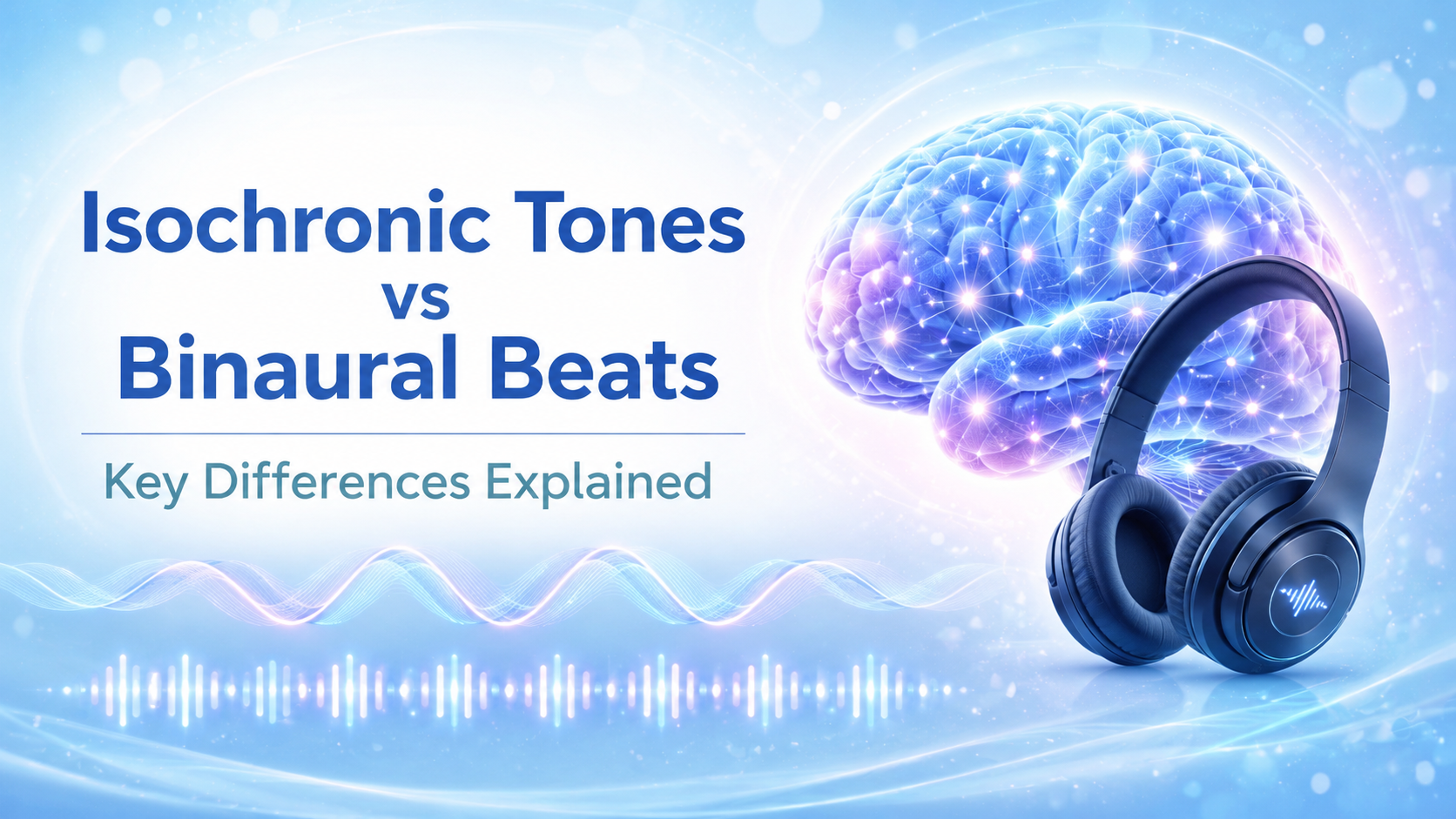
Isochronic tones and binaural beats are both discussed under the broader topic of brainwave entrainment, but they are not the same thing. While both are used in audio programs for focus, relaxation, meditation, and sleep support, they work differently and can feel very different in actual use.
Binaural beats are created when two slightly different tones are played separately into each ear. The brain may then perceive a third rhythmic beat based on the difference between those tones. Isochronic tones, by contrast, use a single tone that pulses on and off at a steady rate.
The practical question is usually not which one sounds more impressive in theory. It is which one better suits your goal, your listening preference, and your routine. Some people find binaural beats softer and easier to leave in the background. Others find isochronic tones more obvious, more structured, or more distracting.
Related Page: What Is Brainwave Entrainment?
What Are Binaural Beats?
Binaural beats are an auditory effect created when one tone is played into one ear and a slightly different tone is played into the other. The brain may interpret the difference between those tones as a rhythmic beat.
For example, if one ear hears 200 Hz and the other hears 210 Hz, the perceived beat would be 10 Hz. This is why binaural beats are often grouped into broad brainwave-style categories such as alpha, theta, beta, or delta.
Because the tones are delivered separately to each ear, headphones are usually recommended.
Related Page: What Are Binaural Beats and How Do They Work?
What Are Isochronic Tones?
Isochronic tones use a single tone that pulses on and off at a regular interval. Instead of relying on two slightly different frequencies delivered separately to each ear, the effect comes from the repeated pulsing pattern itself.
In practical listening terms, isochronic tones often sound more obvious, more rhythmic, and more “mechanical” than binaural beats. Some people like that because it feels more direct. Others find it less soothing.
Isochronic tones are often used in brainwave entrainment-style audio for focus, meditation, relaxation, and sleep-related routines.
Core Difference
Isochronic Tones vs Binaural Beats: How They Work
🎧 Binaural Beats
Use two slightly different tones, one in each ear. The brain may perceive the difference between them as a rhythmic beat.
Best suited to: subtle background listening, meditation, calm, sleep preparation and lower-intensity focus.
〰️ Isochronic Tones
Use one tone that pulses on and off in a steady rhythm. The pulse is built directly into the sound itself.
Best suited to: stronger rhythmic cues, structured focus sessions and listeners who prefer a more noticeable audio pattern.
Do You Need Headphones?
This is one of the most practical differences.
Binaural beats usually work best with headphones because each ear needs to receive a different tone. Without that left-right separation, the intended effect may be reduced or lost.
Isochronic tones do not rely on separate tones going to each ear in the same way. Because the pulse is built into the sound itself, people often use them with either speakers or headphones depending on preference and setting.
That makes binaural beats the more headphone-dependent format of the two.
Related Page: Do You Need Headphones for Binaural Beats?
Listening Feel
Which One Feels Stronger?
Binaural Beats
Usually feel softer and more subtle. They may sit more easily in the background during meditation, reading, studying or sleep preparation.
Isochronic Tones
Often feel more noticeable because the pulse is clearer. Some people find this helpful, while others find it too distracting.
Which Is Better for Focus?
For focus, some people prefer the clearer pulsing feel of isochronic tones, especially during structured work blocks. Others prefer binaural beats because they feel less intrusive and can sit underneath reading, studying, or writing more easily.
If you are highly sensitive to repetitive sound, binaural beats may feel easier to tolerate. If you like a strong rhythmic anchor during deep work, isochronic tones may appeal more.
There is no one-size-fits-all winner. The better option is the one that helps you stay settled and engaged without becoming distracting.
Related Page: Binaural Beats for Focus: Can They Help Concentration?
Looking Beyond Basic Audio Tracks?
Many people start with free binaural beats or isochronic tones on YouTube or music streaming services. If you enjoy using brain audio, you may eventually want programs designed around specific goals such as focus, sleep, meditation, productivity or relaxation.
Some platforms combine binaural beats, isochronic tones, guided meditation, ambient soundscapes and other audio techniques into structured listening programs.
📘 Recommended Guide
Best Brain Audio Programs for Focus, Sleep & Relaxation →
- 🎧 Brainwave Shots for brainwave audio and relaxation sessions
- 🧠 Subliminal Guru for targeted focus, sleep and productivity programs
- 🎁 Inspire3 Gifts for free personal development and audio resources
- ✅ Which option may suit focus, sleep, meditation and relaxation goals
Which Is Better for Meditation and Calm?
For meditation and calm, many people prefer softer, less attention-grabbing audio. That often makes binaural beats feel more suitable, especially if the track is gentle and low in volume.
Isochronic tones can still work for meditation, but some listeners find the pulsing effect too noticeable for quiet inward attention. Others like it because it gives their mind something steady to return to.
If your goal is a softer calming atmosphere, binaural beats may be easier to begin with. If your goal is a more structured rhythmic cue, isochronic tones may be worth testing.
Related Page: Brainwave Entrainment for Meditation and Calm
Which Is Better for Sleep?
For sleep preparation, softer audio is often easier to tolerate. That is one reason many people start with binaural beats for sleep-oriented use. A calmer, less mechanical sound may fit better into a wind-down routine.
Isochronic tones can work for some people, but others find the pulsing feel too noticeable at bedtime. If the sound keeps drawing your attention, it may work against relaxation rather than support it.
In practice, the better sleep option is usually the one that feels the least disruptive while still helping you settle mentally.
Related Page: Binaural Beats for Sleep: What to Know Before You Try Them
What Does the Research Say?
The evidence base here is not as clean as marketing often suggests. Research on binaural beats remains mixed, and direct comparison studies involving isochronic-style stimulation are still limited. That means strong claims such as “isochronic tones are definitely stronger” or “binaural beats are scientifically proven to work better” go beyond what the current evidence can support.
If you want to review the evidence directly, a systematic review on binaural beat stimulation and brain oscillatory activity found the literature heterogeneous and methodologically mixed. Newer EEG work is also beginning to compare isochronic-inspired stimulation with binaural paradigms, but the head-to-head evidence is still developing rather than settled.
Safety and Comfort
For both formats, the main everyday safety issue is usually not the beat method itself but how the audio is used. Volume, listening duration, headphone comfort, and context matter more than claims about “stronger entrainment.”
Safe listening principles still apply. The World Health Organization safe listening guidance makes clear that both sound level and listening duration affect hearing risk.
In practical terms:
- Keep the volume moderate
- Do not assume louder means better results
- Take breaks during long sessions
- Stop if the audio causes headaches, agitation, or ear fatigue
Related Page: Are Binaural Beats Safe? Benefits, Risks and What to Know
Quick Fit Check
Which Audio Style May Suit You Better?
Neither binaural beats nor isochronic tones are automatically better. The right choice depends on your goal, listening preference, and how your brain responds to rhythmic sound.
🎧 Binaural Beats May Suit You If:
- You prefer softer, less obvious audio
- You are using the track for meditation or calm
- You want a more subtle background sound
- You are comfortable using headphones
- You find strong pulsing sounds distracting
〰️ Isochronic Tones May Suit You If:
- You prefer a more noticeable rhythmic pulse
- You want a stronger sense of structure during focus work
- You do not want to depend on separate left-right tones
- You like audio that feels more direct and less ambient
Want structured options instead of random tracks? Compare dedicated brain audio platforms for focus, meditation, sleep and relaxation in our guide to Best Brain Audio Programs for Focus, Sleep & Relaxation .
Avoid These Pitfalls
Common Mistakes to Avoid
Neither binaural beats nor isochronic tones are universally better. Getting the most from brain audio often comes down to choosing the right listening style for your goal and using it appropriately.
Assuming One Is Always Better
Neither format wins for everyone. Personal preference, comfort and your listening goal matter far more than popularity.
Listening Too Loud
Brain audio should be comfortable. Excessive volume is more likely to become distracting than helpful.
Following Marketing Hype
Online claims often go well beyond the available evidence. Treat dramatic promises with healthy skepticism.
Using the Wrong Audio for Your Goal
A track that works well for deep focus may not be ideal for meditation or bedtime. Match the audio to what you’re trying to achieve.
💡 Looking for Structured Brain Audio?
If you’re finding it difficult to choose between free binaural beats and isochronic tones, you may benefit from dedicated brain audio platforms that combine multiple listening techniques for focus, meditation, sleep and relaxation.
Compare Brain Audio Programs →Decision Guide
How to Choose the Right Audio Style
Start with binaural beats, especially if you prefer subtle background audio.
Test isochronic tones if you like a clearer pulsing rhythm during focus sessions.
Use whichever feels least intrusive. Comfort matters more than theory.
The most useful question is not “Which one is scientifically better?” but “Which one actually helps me in a calm, sustainable and comfortable way?”
Final Thoughts
Still Not Sure Which Brain Audio Style Is Right?
Isochronic tones and binaural beats are both used in brainwave entrainment-style audio, but they work differently and feel different in practice. Binaural beats are usually softer and more headphone-dependent, while isochronic tones are usually more pulsed and noticeable.
Neither one is universally best. The stronger choice depends on your goal, your listening environment, your tolerance for repetitive sound, and whether the audio genuinely helps rather than distracts you.
Explore Structured Brain Audio Programs
- 🎯 Focus and deep work
- 🧘 Meditation and calm
- 💤 Sleep and relaxation
- 🧠 Mental clarity and productivity
- 🎁 Free and premium audio options
FAQs
What is the main difference between isochronic tones and binaural beats?
Binaural beats use two slightly different tones played separately into each ear, while isochronic tones use one tone that pulses on and off at a steady rate.
Do binaural beats require headphones?
Usually, yes. Binaural beats rely on separate tones reaching each ear, which is why headphones are generally recommended.
Do isochronic tones require headphones?
Not in the same way. Because the pulse is built into the sound itself, people often use isochronic tones with either speakers or headphones depending on preference.
Are isochronic tones stronger than binaural beats?
Some people find isochronic tones feel stronger because the pulse is more obvious, but that does not mean they are automatically better for every goal or every person.
Which is better for focus?
It depends on preference. Some people prefer the stronger rhythmic feel of isochronic tones, while others prefer the softer background feel of binaural beats.
Which is better for meditation?
Many people prefer binaural beats for meditation because they often feel subtler, but others prefer the clearer pulse of isochronic tones.
Which is better for sleep?
For sleep preparation, the better choice is usually the one that feels least intrusive. Many people start with softer audio, but personal preference matters most.
Are isochronic tones and binaural beats both safe?
For many healthy adults, both are generally low risk when used at a comfortable volume and for sensible session lengths. Listening habits matter more than hype.
Can you use both isochronic tones and binaural beats?
Yes. Some people test both formats in different settings to see which suits focus, calm, meditation, or sleep better.
Which one should beginners try first?
If you want a softer and more subtle experience, start with binaural beats. If you want a more obvious pulse, try isochronic tones. The best approach is to test both calmly and keep expectations realistic.
Recommended Next Step
Ready to Move Beyond Free Audio?
Trying free binaural beats and isochronic tones is an excellent place to start, but many people eventually look for more structured brain audio programs designed around specific goals.
We’ve compared several of the most popular platforms for focus, meditation, sleep and relaxation so you can quickly understand what each offers.
Inside Our Comparison Guide
- ✓ Brainwave Shots
- ✓ Subliminal Guru
- ✓ Inspire3 Gifts
- ✓ Free vs premium options
- ✓ Which program suits focus, meditation, sleep and relaxation
Related Articles
- Brainwave Entrainment: Binaural Beats, Brain Waves & Audio Tools for Focus, Sleep and Calm
- What Are Binaural Beats and How Do They Work?
- Brain Waves Explained: Alpha, Beta, Theta, Delta and Gamma
- Are Binaural Beats Safe? Benefits, Risks and What to Know
- How Long Should You Listen to Binaural Beats?

Medically Reviewed for Accuracy
This content has been reviewed for accuracy and clarity by the Cognitive Performance Hub Medical Review Team, using current research and evidence-based guidelines.
Our review process ensures that information related to brain health, cognitive performance, and wellness strategies aligns with current scientific understanding and best practices.
References
-
PubMed — Binaural beats to entrain the brain? A systematic review of the effects of binaural beat stimulation on brain oscillatory activity
https://pubmed.ncbi.nlm.nih.gov/37205669/ -
PubMed — Binaural Beats through the Auditory Pathway
https://pubmed.ncbi.nlm.nih.gov/32066611/ -
World Health Organization (WHO) — Deafness and hearing loss: Safe listening
https://www.who.int/news-room/questions-and-answers/item/deafness-and-hearing-loss-safe-listening
Written by Cognitive Performance Hub Editorial Team
Our editorial team consists of health researchers and writers specializing in brain health, cognitive performance, and evidence-based wellness strategies.
We create clear, research-informed content designed to help readers improve focus, enhance memory, reduce brain fog, and support long-term cognitive health.
Brain Health Safety Note
This content is for educational purposes only and should not be used as a substitute for medical advice, diagnosis, or treatment.
If you are experiencing significant memory problems, confusion, sudden cognitive changes, neurological symptoms, or concerns about brain health, speak with a qualified healthcare professional promptly.
Never delay seeking medical advice because of something you read on this site.
Affiliate Transparency
Some pages on Cognitive Performance Hub may include affiliate links. If you choose to make a purchase through one of these links, we may earn a small commission at no extra cost to you.
Our editorial content is created independently and is designed to prioritize clarity, evidence-informed information, and reader value.