Part of the Brainwave Entrainment pillar in the Brain Health Hub.
Brain waves are patterns of electrical activity in the brain. They are often grouped into frequency ranges such as alpha, beta, theta, delta, and gamma, and each range is commonly associated with different states like alertness, relaxed focus, drowsiness, deep sleep, or complex mental processing.
If you have ever looked into binaural beats, meditation audio, focus music, or brainwave entrainment, you have probably seen these terms used everywhere. But brain waves are often explained in an oversimplified way. In reality, the brain is more dynamic than a simple “one wave equals one state” model.
This guide explains what brain waves are, what each major category means, how they relate to focus and sleep, and why it is important to understand them in a realistic way.
Related Page: What Is Brainwave Entrainment?
What Are Brain Waves?
Brain waves are rhythmic patterns of electrical activity produced when groups of brain cells communicate. They can be measured using electroencephalography (EEG) and help researchers understand different states such as concentration, relaxation, meditation and sleep.
⚡ Electrical Signals
Brain waves reflect electrical activity created as neurons communicate throughout the brain.
🧠 Always Active
The brain never switches to one single wave type. Multiple frequencies work together continuously.
📈 Mental States
Different frequencies tend to become more dominant during focus, relaxation, meditation or sleep.
How Brain Waves Are Measured
Scientists usually measure brain waves using an electroencephalogram (EEG), which records electrical activity through sensors placed on the scalp.
Placed on the scalp.
Record tiny electrical activity.
Show dominant brainwave frequencies.
Researchers compare activity across different mental states.
Why Brain Waves Matter
Brain waves matter because they help us understand how the brain behaves in different states. For example, the brain shows different dominant activity patterns during deep sleep than it does during intense concentration or relaxed wakefulness.
That does not mean one type of brain wave is always “good” and another is always “bad.” Each one has a normal role depending on the situation. The goal is not to eliminate certain brain waves, but to understand how they relate to daily mental states and routines.
Related Page: Brain Health Guide: Improve Focus, Memory & Cognitive Performance Naturally
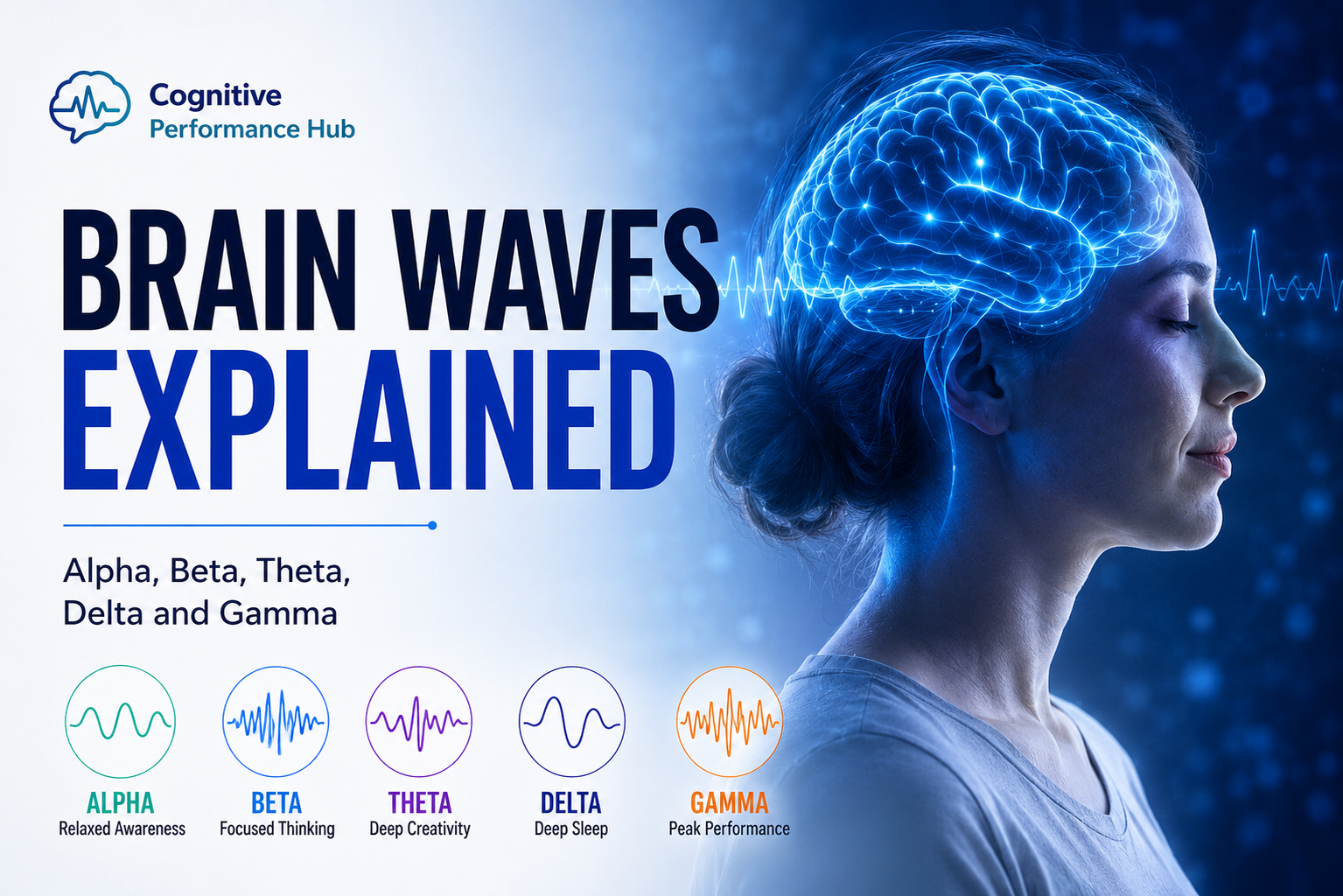
Alpha, Beta, Theta, Delta and Gamma Explained
Each frequency band is commonly associated with particular brain states, but these are broad patterns rather than fixed mental modes.
Alpha Brain Waves
Alpha waves are commonly associated with calm attention, relaxed concentration, light meditation, creativity and restful alertness.
Alpha activity may become more noticeable when you are awake but not under heavy mental pressure.
Beta Brain Waves
Beta waves are commonly associated with alertness, conversation, planning, decision-making, learning and problem-solving.
Beta is a normal part of healthy daytime cognition. It should not automatically be treated as a sign of stress or overstimulation.
Theta Brain Waves
Theta waves are commonly associated with deep relaxation, drowsiness, early sleep, imagery, inward attention and some meditative states.
This is why theta is often discussed in meditation and sleep-oriented audio programs.
Delta Brain Waves
Delta waves are the slowest major brainwave category and are most commonly associated with deep, restorative sleep.
Delta should not be treated as a magic sleep frequency. Healthy sleep still depends on timing, stress, caffeine, light exposure and broader sleep habits.
Brain Health Lifestyle: Sleep, Stress, Nutrition & Daily Habits
Gamma Brain Waves
Gamma waves are often studied in relation to attention, learning, mental integration and fast information processing.
Gamma does not automatically mean peak intelligence or instant cognitive enhancement. It is one part of complex neural activity.
Important: your brain can display activity across several frequency bands at the same time. These categories are useful guides, not rigid switches.
Brain Wave Categories at a Glance
| Brain Wave | Typical State | Often Associated With |
|---|---|---|
| 🔵 Delta | Deep Sleep | Physical restoration |
| 🟣 Theta | Drowsiness | Meditation & early sleep |
| 🟢 Alpha | Relaxed Awake | Calm focus |
| 🟠 Beta | Alert Thinking | Problem-solving |
| 🔴 Gamma | Complex Processing | Learning & integration |
These categories are useful educational models, but real brain activity is dynamic and multiple frequencies are usually present simultaneously.
Can You Have More Than One Brainwave State at the Same Time?
Yes — Multiple Bands Coexist
Different brain regions can show different activity patterns, and several frequency ranges can be present at once.
Dominance Changes
What changes is which frequency patterns become more prominent during sleep, focus, relaxation or mental effort.
Marketing Oversimplifies This
A single audio track cannot reliably lock the entire brain into one perfect state or frequency.
Which Brain Waves Are Linked to Focus and Sleep?
No single frequency creates focus or sleep by itself. These bands are commonly discussed because they may become more prominent during related states.
Focus and Concentration
Alpha: often discussed in relation to calm, steady attention and relaxed concentration.
Beta: commonly involved in active thinking, decision-making and sustained mental effort.
Real-world focus also depends on sleep, hydration, energy, clear work blocks and reduced distractions.
Sleep and Wind-Down
Theta: commonly associated with drowsiness, relaxation and the transition into sleep.
Delta: most commonly linked with deeper, slow-wave sleep.
Audio may support a bedtime routine, but it cannot correct persistent sleep problems caused by stress, pain, medication or health conditions.
Brain Waves and Brainwave Entrainment
Brainwave entrainment is the use of rhythmic stimulation, often sound, to support a mental state that may be associated with certain brain wave patterns. This is where terms like alpha, theta, or delta often show up in binaural beats, isochronic tones, and meditation audio programs.
For example, a binaural beat track may be labeled “alpha for focus” or “theta for meditation.” The idea is that rhythmic input may help encourage a state associated with that range.
That does not mean the brain is being fully controlled or perfectly locked into one frequency. It is more realistic to think of entrainment audio as a routine support tool that may help shape a mental environment.
Related Page: What Are Binaural Beats and How Do They Work?
Related Page: What Is Brainwave Entrainment?
What Can Influence Brainwave Patterns?
Brain activity is influenced by much more than audio. Your physical state, environment and daily habits all shape how alert, calm, tired or mentally engaged you feel.
Brain state reflects the whole person—not one soundtrack, frequency or audio claim.
Natural Ways to Support Healthy Brain States
You cannot simply select a brainwave state on demand, but you can improve the conditions that support focus, calm, recovery and restorative sleep.
✓ Protect Your Sleep
Consistent sleep timing and sufficient rest support healthier energy regulation and recovery.
✓ Practise Meditation
Quiet attention, mindfulness and breath awareness may support calmer mental states.
✓ Exercise Regularly
Physical activity can support mood, attention, stress regulation and mental clarity.
✓ Use Breathing Practices
Slow, controlled breathing may help reduce overstimulation and support relaxation.
✓ Structure Work Blocks
Clear task periods and planned breaks may support steadier attention and reduce mental fatigue.
✓ Reduce Digital Overload
Lowering unnecessary notifications and screen stimulation can make it easier to settle mentally.
Some people also use binaural beats, isochronic tones or calming audio as supportive parts of these routines.
Common Myths About Brain Waves
❌ Myth
One brain wave is always better than the others.
✅ Reality
Each frequency has a normal role depending on your current activity.
❌ Myth
You can only have one brain wave at a time.
✅ Reality
Multiple brainwave frequencies occur simultaneously across different brain regions.
❌ Myth
One audio track can instantly hack your brain.
✅ Reality
Sleep, stress, lifestyle and environment all influence mental state alongside any audio tool.
How to Use Brainwave Information Practically
The most useful approach is not to obsess over finding a perfect frequency. Instead, use brainwave concepts to better understand the conditions that support focus, calm and sleep.
For Better Focus
Improve sleep, reduce distractions, manage energy and create structured work periods before chasing “perfect focus frequencies.”
For Better Sleep
Build a calmer evening routine, reduce stimulation and protect sleep timing rather than relying on one delta or theta track.
Brainwave information becomes most useful when it supports healthier routines instead of becoming another source of digital overwhelm.
Brainwave Categories Are Helpful Guides, Not Rigid Rules
Alpha, Beta, Theta, Delta and Gamma describe broad patterns of electrical brain activity commonly associated with relaxed focus, active thinking, drowsiness, deep sleep and complex processing.
The key point is that brain activity is dynamic and layered. The brain does not simply switch into one isolated wave state, and no soundtrack can reliably place every listener into one perfect frequency.
Use brainwave information to understand your mental states more realistically, evaluate audio claims more carefully and build stronger routines for focus, calm and sleep.
FAQs About Brain Waves
What are brain waves?
Brain waves are patterns of electrical activity created when groups of brain cells communicate. They can be measured with EEG and are often grouped into different frequency ranges.
What are the five main brain wave types?
The five most commonly discussed brain wave categories are delta, theta, alpha, beta, and gamma.
What do alpha brain waves mean?
Alpha waves are commonly associated with relaxed wakefulness, calm focus, and restful alertness.
What do beta brain waves mean?
Beta waves are commonly associated with active thinking, alertness, concentration, and problem-solving.
What do theta brain waves mean?
Theta waves are commonly associated with drowsiness, deep relaxation, meditation, and early sleep transition.
What do delta brain waves mean?
Delta waves are commonly associated with deep sleep and low-arousal restorative states.
What do gamma brain waves mean?
Gamma waves are often associated with fast information processing, mental integration, and complex cognitive activity.
Can you be in more than one brain wave state at once?
Yes. The brain is dynamic, and multiple activity patterns can be present at the same time. What changes is which patterns become more dominant.
Which brain waves are best for focus?
Focus is not caused by one single brain wave alone, but alpha and beta are often discussed in relation to calm attention and active concentration.
Which brain waves are linked to sleep?
Theta is commonly associated with drowsiness and sleep transition, while delta is most commonly linked with deep sleep.
Understand Brain Waves in the Right Context
Brain waves are helpful for understanding focus, sleep, calm, and mental states, but they make the most sense when viewed alongside the bigger picture of brain health. Explore the full pillar or continue with the Brain Health Guide.
Related Articles
- Brainwave Entrainment: Binaural Beats, Brain Waves & Audio Tools for Focus, Sleep and Calm
- What Is Brainwave Entrainment?
- What Are Binaural Beats and How Do They Work?
- Brain Health Guide: Improve Focus, Memory & Cognitive Performance Naturally
- Brain Health Lifestyle: Sleep, Stress, Nutrition & Daily Habits
Medically Reviewed for Accuracy
This content has been reviewed for accuracy and clarity by the Cognitive Performance Hub Medical Review Team, using current research and evidence-based guidelines.
Our review process ensures that information related to brain health, cognitive performance, and wellness strategies aligns with current scientific understanding and best practices.
Written by Cognitive Performance Hub Editorial Team
Our editorial team consists of health researchers and writers specializing in brain health, cognitive performance, and evidence-based wellness strategies.
We create clear, research-informed content designed to help readers improve focus, enhance memory, reduce brain fog, and support long-term cognitive health.
Brain Health Safety Note
This content is for educational purposes only and should not be used as a substitute for medical advice, diagnosis, or treatment.
If you are experiencing significant memory problems, confusion, sudden cognitive changes, neurological symptoms, or concerns about brain health, speak with a qualified healthcare professional promptly.
Never delay seeking medical advice because of something you read on this site.
References / Sources
This guide draws on clinical EEG references and peer-reviewed research covering normal brainwave patterns, frequency bands, sleep-related activity and binaural-beat stimulation.
- Nayak CS, Anilkumar AC. Normal EEG Waveforms. StatPearls, NCBI Bookshelf.
- Louis EKS, Frey LC, Britton JW, et al. The Normal EEG. In: Electroencephalography: An Introductory Text and Atlas of Normal and Abnormal Findings. NCBI Bookshelf.
- Ingendoh RM, Posny ES, Heine A. Binaural Beats to Entrain the Brain? A Systematic Review of the Effects of Binaural Beat Stimulation on Brain Oscillatory Activity. PLOS ONE.
Brainwave frequency boundaries and their associated states are approximate. EEG findings must be interpreted in relation to brain region, age, wakefulness, task, sleep stage and clinical context.