Part of the Brainwave Entrainment pillar in the Brain Health Hub.
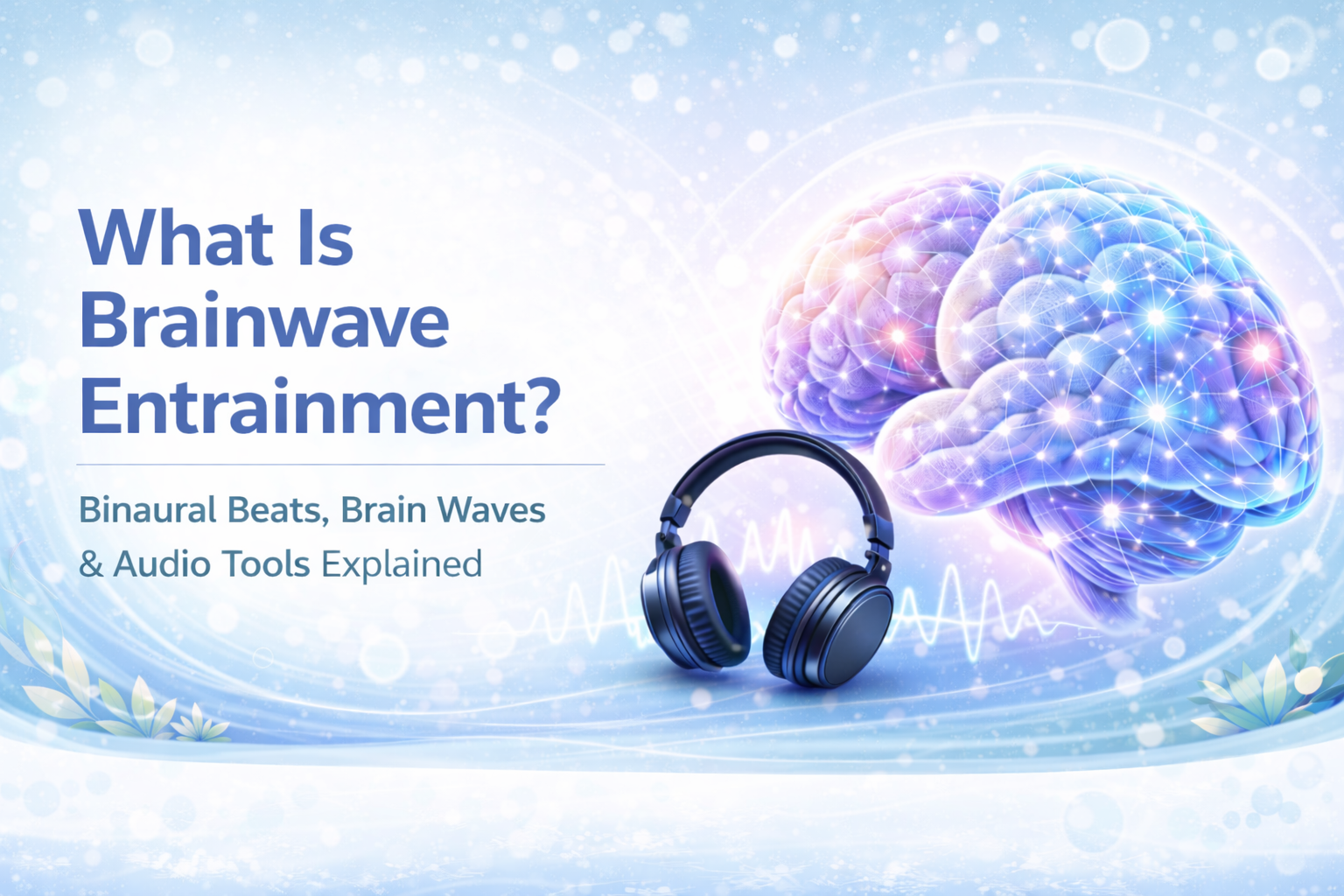
Brainwave entrainment is the use of rhythmic stimulation, usually sound, light, or repeated pulses, to encourage the brain to follow a specific frequency pattern. In simple terms, it is a way of using repeated sensory input to support certain mental states such as focus, relaxation, calm, meditation, or sleep preparation.
The idea behind brainwave entrainment is that the brain responds to rhythm. When the brain is exposed to repeated sound patterns or pulses, it may begin to mirror that rhythm to some degree. This is why brainwave entrainment is often discussed in connection with binaural beats, isochronic tones, meditation audio, focus music, and sleep soundscapes.
Brainwave entrainment has become popular because many people are looking for natural, non-invasive tools to support mental clarity, concentration, stress management, and better daily routines. While the research is still developing, many users explore brainwave audio as part of a broader brain health strategy rather than a standalone solution.
Related Page: Brainwave Entrainment: Binaural Beats, Brain Waves & Audio Tools for Focus, Sleep and Calm
Brainwave Entrainment Meaning in Simple Terms
A simple way to think about brainwave entrainment is this: the brain is active in patterns, and rhythmic input may help guide those patterns toward a more relaxed, alert, or focused state.
For example, if you listen to a slow, calming audio track designed for sleep or relaxation, the repeated rhythm may help create a mental environment that feels calmer and less mentally busy. If you listen to a more structured focus-based sound pattern during work, it may help you settle into a more concentrated routine.
This does not mean brainwave entrainment controls the brain in a dramatic or magical way. It is better understood as a supportive tool that may help shape the conditions for a desired mental state.
How It Works
Brainwave Entrainment Uses Rhythm to Support Mental State
Brainwave entrainment works by exposing the brain to repeated sensory rhythms, most often through sound. These patterns may help create conditions that feel more focused, relaxed, calm or sleep-friendly.
🎧 Audio Pattern
The track uses pulses, beats, tones or rhythmic layers.
🧠 Brain Response
The brain may respond to repeated rhythm, sometimes called a frequency-following response.
🎯 Practical Use
People use it during focus work, meditation, relaxation, sleep preparation or wind-down routines.
Common Audio Types
Common Types of Brainwave Entrainment
Brainwave entrainment is a broad category. Binaural beats are one type, but they are not the only form.
🎧 Binaural Beats
Binaural beats are created when two slightly different tones are played separately into each ear. The brain perceives the difference between the two tones as a rhythmic beat.
Because each ear receives a different tone, headphones are usually needed for binaural beats to work properly.
What Are Binaural Beats? →〰️ Isochronic Tones
Isochronic tones use a single tone that switches on and off in a steady pulse. They do not rely on separate tones in each ear in the same way binaural beats do.
Many people compare isochronic tones with binaural beats when choosing audio tools for focus, sleep, or relaxation.
Isochronic Tones vs Binaural Beats →🎵 Monaural Beats
Monaural beats are created by combining tones before they reach the ears, producing a rhythmic beat that can be heard directly. They are less commonly discussed than binaural beats, but they still fall under the wider entrainment category.
🧘 Meditation & Relaxation Audio
Some meditation tracks, ambient soundscapes, and calming audio programs use rhythmic patterns designed to support relaxation, stillness, or a slower mental pace.
These may not always be labeled as brainwave entrainment, but they often overlap with the same general purpose.
Brainwave Entrainment for Meditation →💡 Light-Based & Sensory Entrainment
Some systems use flashing lights or multi-sensory stimulation rather than audio alone. These approaches are less common for general wellness use and may require more caution, especially for people with seizure disorders or sensitivity to flashing light.
What Are Brain Waves?
Brain waves are patterns of electrical activity in the brain. They are often grouped into categories based on frequency and are associated with different states of wakefulness, alertness, relaxation, or sleep.
The most commonly discussed brain wave categories include:
- Delta: commonly associated with deep sleep
- Theta: commonly associated with drowsiness, meditation, and relaxed awareness
- Alpha: commonly associated with calm wakefulness and relaxed focus
- Beta: commonly associated with active thinking and alert mental effort
- Gamma: commonly associated with higher-level information processing
These categories are useful for learning, but real brain activity is more complex than a simple one-wave model. Different regions of the brain can show different patterns at the same time depending on what you are doing.
Related Page: Brain Waves Explained: Alpha, Beta, Theta, Delta and Gamma
What Is Brainwave Entrainment Used For?
People explore brainwave entrainment for different reasons depending on their goals, routines, and preferences. It is most often used as a wellness or productivity support tool rather than a medical treatment.
1. Focus and Concentration
Some people use brainwave audio while studying, writing, reading, or working through demanding tasks. In this setting, the audio may help create a more structured and distraction-reduced environment.
Related Page: Binaural Beats for Focus: Can They Help Concentration?
2. Relaxation and Stress Relief
Brainwave entrainment is also used by people who want to slow down mentally after a demanding day. Gentle rhythmic sound may help signal the nervous system that it is time to reduce stimulation and shift into a calmer state.
3. Meditation
For beginners who find silent meditation difficult, entrainment audio can act as an anchor. The steady rhythm gives the mind something to follow, which may make it easier to settle down and stay present.
Related Page: Brainwave Entrainment for Meditation and Calm
4. Sleep Preparation
Some people use slower, calming sound patterns as part of their evening wind-down routine. These may help support relaxation before bed, especially when combined with healthy sleep habits such as dimming lights and reducing screen exposure.
Related Page: Binaural Beats for Sleep: What to Know Before You Try Them
5. Daily Cognitive Wellness Routines
For some users, brainwave entrainment is simply one part of a larger brain health system that may also include sleep, hydration, nutrition, movement, stress management, and structured focus blocks.
Related Page: Brain Health Lifestyle: Sleep, Stress, Nutrition & Daily Habits
Want Structured Brain Audio Programs?
Many people start with free binaural beats, isochronic tones, or meditation audio. If you enjoy brainwave entrainment, you may eventually want structured programs designed around specific goals such as focus, sleep, meditation, productivity or relaxation.
📘 Recommended Guide
Best Brain Audio Programs for Focus, Sleep & Relaxation →
- 🎧 Brainwave Shots
- 🧠 Subliminal Guru
- 🎁 Inspire3 Gifts
- ✅ Which programs may suit focus, sleep, meditation and calm
Does Brainwave Entrainment Really Work?
This is one of the most common questions around the topic. The most accurate answer is that brainwave entrainment may help some people in certain situations, but it is not a miracle tool and it should not be treated like a guaranteed brain hack.
Some users report that brainwave audio helps them feel calmer, more focused, or more settled during meditation or sleep preparation. Others do not notice much difference. Results may vary depending on the type of audio, the person using it, the listening environment, the goal, and how consistently it is used.
The best way to think about brainwave entrainment is as a supportive tool. It may help shape an environment that encourages focus, calm, or relaxation, but it does not replace basic health foundations.
Balanced View
Benefits and Limitations of Brainwave Entrainment
Potential Benefits
- May support focus during work or study
- May help create a calmer mental environment
- May support meditation practice for beginners
- May fit into a sleep wind-down routine
- May provide a structured audio cue for daily habits
Important Limitations
- It is not a cure for insomnia, anxiety or cognitive decline
- It does not replace sleep, nutrition or stress management
- Not every user responds the same way
- Some audio may feel distracting or irritating
- Quality varies widely between programs
Is Brainwave Entrainment Safe?
For many healthy adults, moderate-volume listening to calming audio is generally low risk. However, brainwave entrainment should still be used sensibly.
Use extra caution if you:
- Have epilepsy or a seizure disorder
- Are sensitive to repetitive audio or flashing light
- Experience headaches, dizziness, agitation, or distress during use
- Have a serious mental health or neurological condition
- Plan to use it while driving or doing anything that requires full attention
It is also important not to overstate what brainwave entrainment can do. It should not replace medical care, therapy, or professional support when that is needed.
Related Page: Are Binaural Beats Safe? Benefits, Risks and What to Know
How to Start Using Brainwave Entrainment
If you are completely new to brainwave entrainment, start simply.
Choose one goal
Decide whether you want to use it for focus, relaxation, meditation, or sleep preparation. Your goal should guide the type of audio you test.
Start with short sessions
Begin with 10 to 20 minutes rather than long sessions. This gives you a chance to see how you respond without overdoing it.
Keep the volume comfortable
Louder is not better. The audio should feel steady and comfortable, not intense or irritating.
Use it in the right setting
Focus audio should be used during a defined work block. Sleep audio should be used as part of a calm evening routine. Relaxation audio should be used when you are somewhere safe and comfortable.
Pay attention to your response
If the audio helps you feel settled, focused, or relaxed, it may be worth continuing. If it causes irritation, overstimulation, headaches, or discomfort, stop using it.
Myth Check
Common Myths About Brainwave Entrainment
❌ Myth: It instantly rewires your brain
Brainwave entrainment is better understood as a supportive routine aid, not an instant transformation tool.
❌ Myth: Louder means better
Comfort matters more than intensity. Overly loud audio may be counterproductive.
❌ Myth: It replaces healthy habits
Brainwave audio works best alongside sleep, movement, hydration and stress management.
❌ Myth: One track works for everyone
People respond differently depending on preference, sensitivity, goal and listening environment.
Brainwave Entrainment as Part of a Bigger Brain Health Strategy
Brainwave entrainment makes the most sense when it is placed inside a wider brain health framework. Someone who is sleep deprived, chronically stressed, dehydrated, and mentally overloaded is unlikely to solve everything with audio alone.
That is why the most realistic approach is to combine brainwave entrainment with:
- Consistent sleep habits
- Daily movement
- Balanced nutrition
- Hydration
- Stress management
- Focused work routines
- Recovery time
Related Page: Memory & Cognitive Function
Related Page: Brain Fog: Causes, Symptoms & How to Clear It
Final Thoughts
Brainwave Entrainment Is a Tool — Not a Magic Switch
Brainwave entrainment uses rhythmic stimulation to support mental states such as focus, calm, meditation, relaxation or sleep preparation. It includes tools such as binaural beats, isochronic tones and other structured audio programs.
The best way to think about it is as a practical support tool. For some people, it may become part of a useful daily routine. For others, it may simply be one option worth testing alongside broader brain health habits.
Ready to Compare Brain Audio Programs?
- 🎯 Focus and deep work
- 🧘 Meditation and calm
- 💤 Sleep and relaxation
- 🧠 Mental clarity and productivity
- 🎁 Free and premium audio options
FAQs
What is brainwave entrainment?
Brainwave entrainment is the use of rhythmic stimulation, such as sound or light, to encourage the brain to follow a repeated pattern. It is commonly used in audio tools designed for focus, relaxation, meditation, and sleep preparation.
How does brainwave entrainment work?
Brainwave entrainment works by exposing the brain to repeated sensory rhythms, such as pulsing tones or sound patterns. The idea is that the brain may begin to respond to those rhythms and shift toward a more focused, calm, or relaxed state.
Are binaural beats the same as brainwave entrainment?
No. Binaural beats are one type of brainwave entrainment. Brainwave entrainment is the broader category and also includes methods such as isochronic tones, monaural beats, and other rhythmic audio tools.
What is brainwave entrainment used for?
People use brainwave entrainment for focus, concentration, meditation, relaxation, stress support, and sleep preparation. It is usually used as a wellness or productivity tool rather than a medical treatment.
Does brainwave entrainment really work?
Some people find it useful, while others notice little difference. It may help support certain routines or mental states, but it is not a guaranteed solution and should not replace healthy habits or medical care.
Is brainwave entrainment safe?
For many healthy adults, moderate-volume audio use is generally low risk. However, people with seizure disorders, sound sensitivity, neurological conditions, or distress with certain audio patterns should be cautious.
Do you need headphones for brainwave entrainment?
It depends on the type. Binaural beats usually require headphones because each ear needs to receive a different tone. Other forms, such as isochronic tones, may not always require headphones.
Can brainwave entrainment help with sleep?
It may help some people relax and wind down before bed, especially when used alongside good sleep habits. It should not be viewed as a cure for chronic sleep problems.
Can brainwave entrainment help with focus?
Some users find that structured audio helps create a more consistent focus environment during study or work. It may be useful as part of a distraction-reduction routine.
What is the difference between brainwave entrainment and meditation audio?
Brainwave entrainment is usually designed around rhythmic stimulation intended to influence mental state. Meditation audio may include guided breathing, music, ambient sound, or rhythm-based support. The two often overlap but are not always the same thing.
Recommended Next Step
Ready to Explore Brain Audio Programs?
Now that you understand what brainwave entrainment is and how different audio techniques work, the next step is choosing programs that match your goals. Whether you want better focus, deeper meditation, improved sleep or greater relaxation, we’ve compared some of the most popular brain audio platforms in one practical guide.
Inside Our Comparison Guide
- 🧠 Brainwave Shots
- 🎧 Subliminal Guru
- 🎁 Inspire3 Gifts
- ✅ Free vs premium brain audio options
- 🎯 Which programs are best for focus, sleep, meditation and relaxation
- 📊 Side-by-side comparisons to help you choose
Related Articles
- Brainwave Entrainment: Binaural Beats, Brain Waves & Audio Tools for Focus, Sleep and Calm
- What Are Binaural Beats and How Do They Work?
- Brain Waves Explained: Alpha, Beta, Theta, Delta and Gamma
- Are Binaural Beats Safe? Benefits, Risks and What to Know
- Brain Health Guide: Improve Focus, Memory & Cognitive Performance Naturally
References
The information in this article is based on peer-reviewed research and trusted medical and scientific sources discussing brainwave activity, auditory stimulation, cognition, relaxation, sleep and meditation.
- National Center for Biotechnology Information (NCBI) – Brain Rhythms and Neural Oscillations
- Frontiers in Human Neuroscience – Effects of Auditory Beat Stimulation on Cognition and Mood
- NCBI – Systematic Review of Binaural Beat Stimulation
- National Center for Complementary and Integrative Health (NCCIH) – Meditation and Mindfulness
- Cleveland Clinic – Understanding Brain Waves
- Sleep Foundation – Meditation for Better Sleep
- American Psychological Association – Meditation and Mindfulness
Medically Reviewed for Accuracy
This content has been reviewed for accuracy and clarity by the Cognitive Performance Hub Medical Review Team, using current research and evidence-based guidelines.
Our review process ensures that information related to brain health, cognitive performance, and wellness strategies aligns with current scientific understanding and best practices.
Written by Cognitive Performance Hub Editorial Team
Our editorial team consists of health researchers and writers specializing in brain health, cognitive performance, and evidence-based wellness strategies.
We create clear, research-informed content designed to help readers improve focus, enhance memory, reduce brain fog, and support long-term cognitive health.
Brain Health Safety Note
This content is for educational purposes only and should not be used as a substitute for medical advice, diagnosis, or treatment.
If you are experiencing significant memory problems, confusion, sudden cognitive changes, neurological symptoms, or concerns about brain health, speak with a qualified healthcare professional promptly.
Never delay seeking medical advice because of something you read on this site.
Affiliate Transparency
Some pages on Cognitive Performance Hub may include affiliate links. If you choose to make a purchase through one of these links, we may earn a small commission at no extra cost to you.
Our editorial content is created independently and is designed to prioritize clarity, evidence-informed information, and reader value.