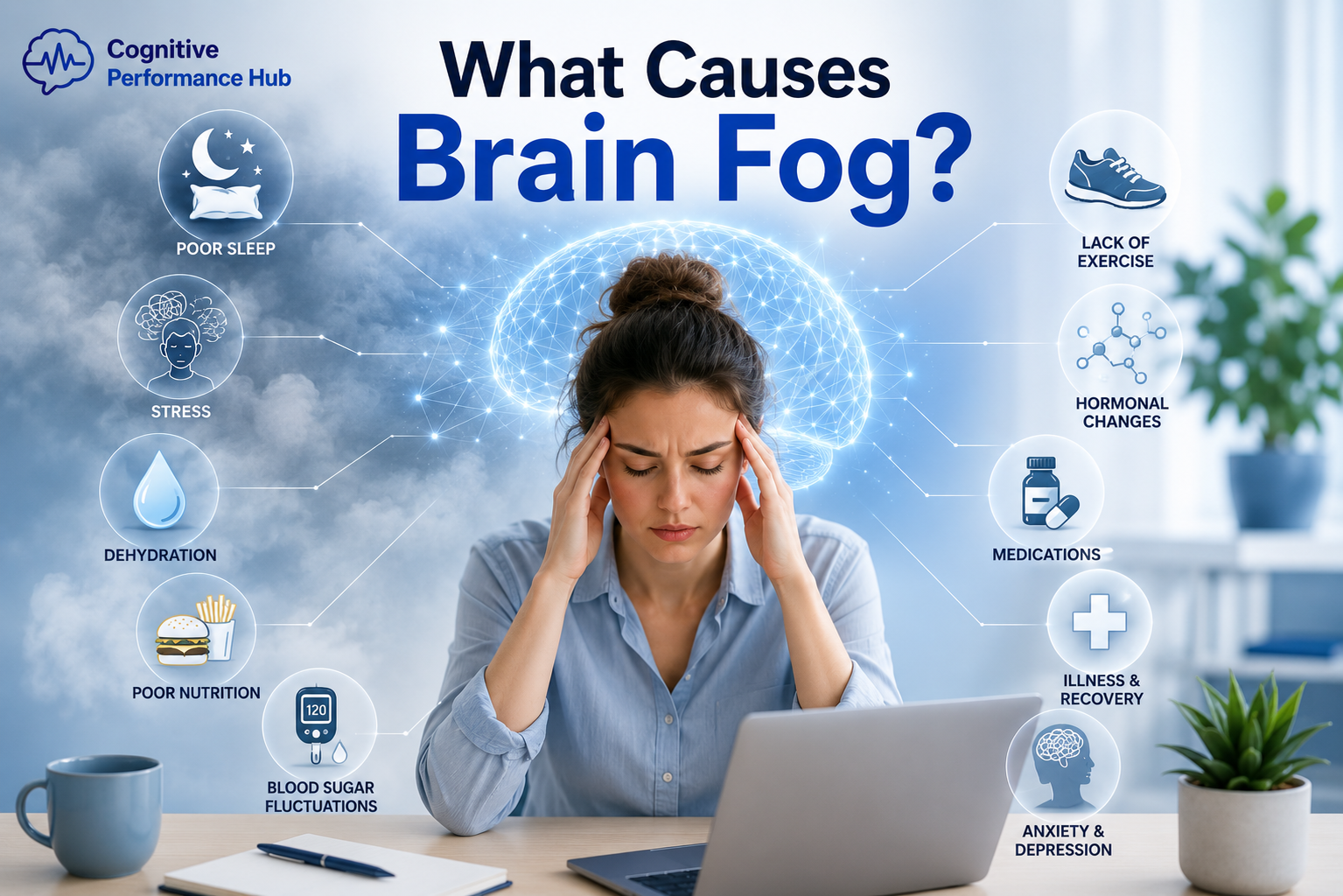
Brain fog is not a disease itself. Instead, it is a collection of symptoms that can make thinking feel slower, concentration more difficult, and everyday mental tasks more challenging.
Many people describe brain fog as feeling mentally cloudy, forgetful, distracted, or unusually tired. While the experience is common, the underlying causes can vary significantly from person to person.
Understanding what may be contributing to your symptoms is often the first step toward improving mental clarity.
If you are new to this topic, start with our guide explaining what brain fog is.
Brain Fog Usually Has More Than One Cause
One of the biggest misconceptions about brain fog is that it always has a single trigger.
In reality, several factors often work together. Common combinations may include:
- Poor sleep combined with chronic stress
- Dehydration combined with skipped meals
- Illness combined with limited physical activity
- Long work hours combined with inadequate recovery
Looking at your overall lifestyle is usually more helpful than searching for one single explanation.
1. Poor Sleep
Sleep is one of the most common contributors to brain fog.
During sleep, the brain helps consolidate memories, regulate important biological processes, and prepare for learning and concentration the following day.
When sleep quality or duration suffers, you may notice:
- Difficulty concentrating
- Slower thinking
- Poor attention
- Forgetfulness
- Reduced productivity
- Mental fatigue
Improving sleep is often one of the highest-impact steps for supporting clearer thinking. Learn more about the connection between sleep and cognition in our Sleep and Brain Health guide.
2. Chronic Stress
Long-term stress can affect much more than mood.
Persistent stress may influence attention, working memory, decision-making, mental energy, and overall cognitive performance.
Common sources of ongoing stress include:
- Work pressure
- Financial concerns
- Family responsibilities
- Caregiving
- Emotional strain
- Burnout
Stress can also reduce sleep quality, which creates another pathway through which mental clarity may decline.
For more practical guidance, visit our article on stress and brain function.
3. Mental Fatigue
The brain performs best when it has regular opportunities to recover.
Constant multitasking, long workdays, continuous notifications, and excessive screen time can leave many people feeling mentally exhausted.
Common signs of mental fatigue include:
- Slower thinking
- Reduced motivation
- Difficulty focusing
- Feeling overwhelmed
- Trouble making decisions
- Reduced mental stamina
If this sounds familiar, read our complete guide to mental fatigue.
4. Poor Nutrition
The brain requires a reliable supply of energy and nutrients to function effectively.
Poor dietary habits may contribute to reduced mental performance, especially when they occur alongside inadequate sleep, stress, or dehydration.
Potential nutrition-related contributors include:
- Highly processed diets
- Inadequate protein intake
- Excessive added sugar
- Low fruit and vegetable intake
- Possible nutrient deficiencies
- Irregular eating patterns
Nutrition alone does not explain every case of brain fog, but balanced eating supports overall brain health and steady mental energy.
You can explore practical dietary strategies in our guide to the best foods for brain health.
5. Blood Sugar Fluctuations
Rapid changes in blood glucose may affect concentration, energy, and mental performance in some people.
Brain fog may feel worse:
- After high-sugar meals
- After skipping meals
- During prolonged fasting
- During an afternoon energy crash
- When poor sleep and stress are also present
Steadier eating patterns that include protein, fibre, healthy fats, and minimally processed carbohydrates may help support more consistent energy.
Learn more about this connection in our guide to blood sugar and brain fog.
6. Dehydration
Even mild dehydration may affect energy, alertness, and concentration.
Possible signs of inadequate hydration include:
- Headaches
- Poor concentration
- Fatigue
- Reduced alertness
- Slower thinking
- Dry mouth or increased thirst
Drinking fluids consistently throughout the day is a simple habit that may help support cognitive function and physical energy.
7. Lack of Physical Activity
Regular movement supports both physical and cognitive health.
Exercise may help support:
- Healthy circulation
- Mood regulation
- Stress management
- Sleep quality
- Energy levels
- Long-term cognitive health
Long periods of sitting with very little movement may contribute to feeling physically and mentally sluggish.
You do not need an intense exercise plan to begin. Walking, resistance training, mobility work, and short movement breaks can all be useful. Read more in our guide to exercise and brain health.
8. Hormonal Changes
Hormonal fluctuations can influence memory, attention, mood, sleep, and mental clarity.
Some people report increased brain fog during:
- Menopause or perimenopause
- Pregnancy
- Postpartum recovery
- Thyroid disorders
- Hormonal treatments
- Other periods of significant hormonal change
Because hormonal symptoms can overlap with many other health issues, persistent or disruptive changes should be discussed with a qualified healthcare professional.
9. Certain Medications
Some prescription and over-the-counter medications may affect concentration, alertness, memory, or reaction time.
Possible medication-related symptoms may include:
- Drowsiness
- Slower thinking
- Poor concentration
- Reduced alertness
- Forgetfulness
Never stop or change a medication without speaking with your healthcare provider.
If you suspect a medication may be contributing to brain fog, speak with the prescribing clinician or pharmacist about your symptoms.
10. Illness and Recovery
Viral illnesses, infections, inflammatory conditions, chronic diseases, and periods of physical recovery may temporarily affect cognitive function.
Some people continue to experience brain fog after the main illness has improved, particularly when sleep, energy, stress, and physical activity have also been affected.
Recovery times vary significantly between individuals. Persistent symptoms should be assessed by a healthcare professional.
11. Anxiety and Depression
Anxiety and depression can influence concentration, motivation, memory, attention, sleep, and mental energy.
For some people, the cognitive symptoms of anxiety or depression can feel just as disruptive as the emotional symptoms.
Possible signs include:
- Difficulty concentrating
- Constant worrying
- Low motivation
- Poor sleep
- Mental exhaustion
- Difficulty making decisions
Supporting the underlying mental health condition may gradually improve mental clarity. Speak with a qualified healthcare or mental health professional if these symptoms are persistent or affecting daily life.
12. Aging
Normal aging may involve gradual changes in processing speed, memory retrieval, and mental flexibility.
However, significant, sudden, or worsening cognitive changes should not automatically be dismissed as simply getting older.
Learn more about normal cognitive changes and long-term brain support in our Healthy Cognitive Aging pillar.
Could More Than One Cause Be Affecting You?
Yes. Brain fog frequently involves several contributing factors at the same time.
For example, someone may be dealing with:
- Poor sleep
- Chronic stress
- Dehydration
- Long work hours
- Limited physical activity
- Inconsistent eating habits
Improving several small areas may produce a more noticeable result than focusing on only one habit.
A useful starting point is to review your sleep, stress, meals, hydration, movement, medications, and recent health changes.
How to Identify Your Possible Brain Fog Triggers
It may help to track your symptoms for one or two weeks.
Consider noting:
- What time brain fog usually appears
- How well you slept the previous night
- What and when you ate
- Your daily fluid intake
- Your stress level
- Your physical activity
- Any recent medication changes
- Whether symptoms occur after illness or exertion
This does not replace medical assessment, but it may help you recognise patterns and explain your symptoms more clearly to a healthcare professional.
When Should You See a Doctor?
Brain fog deserves medical assessment if it:
- Appears suddenly
- Continues for several weeks
- Becomes progressively worse
- Affects work, driving, or daily life
- Follows a head injury
- Begins after a new medication
- Occurs alongside significant memory changes
Seek urgent medical care if brain fog or confusion occurs with symptoms such as:
- Weakness or numbness on one side
- Difficulty speaking
- Sudden vision changes
- Loss of consciousness
- A severe or unusual headache
- Chest pain
- Severe dizziness
- Sudden disorientation
A healthcare professional can help identify possible underlying causes and determine whether testing or treatment is appropriate.
Can Brain Supplements Help?
Some people consider supplements when they experience poor focus, low mental energy, or forgetfulness.
However, supplements are unlikely to compensate for severe sleep deprivation, chronic stress, dehydration, poor nutrition, or an untreated medical condition.
Before using a supplement, consider:
- Whether there is credible evidence for the ingredient
- Whether it may interact with medications
- Whether the dosage is clearly disclosed
- Whether the product has independent quality testing
- Whether your symptoms require medical assessment first
Explore this topic further in our Brain Supplements pillar.
Final Thoughts
Brain fog is often the result of multiple interacting factors rather than a single cause.
Sleep, stress, nutrition, hydration, physical activity, illness, medications, hormonal changes, emotional health, and mental workload can all influence how clearly you think.
Understanding what may be contributing to your symptoms is the first step toward improving mental clarity.
Continue with our complete Brain Fog hub to explore symptoms, related causes, and practical strategies for supporting clearer thinking.
Find What’s Contributing to Your Brain Fog
Brain fog rarely has a single cause. Explore our complete Brain Fog hub to learn how sleep, stress, nutrition, hydration, exercise, and daily habits can all influence mental clarity.
Explore Brain Fog Hub Read Brain Health GuideFrequently Asked Questions
What is the most common cause of brain fog?
There is no single cause that applies to everyone, but poor sleep, chronic stress, mental fatigue, dehydration, illness, and irregular eating patterns are common contributors.
Can lack of sleep cause brain fog?
Yes. Poor-quality or insufficient sleep can affect concentration, memory, attention, reaction time, decision-making, and mental energy.
Can dehydration make brain fog worse?
Yes. Inadequate hydration may contribute to fatigue, headaches, reduced alertness, and difficulty concentrating.
Can stress cause brain fog?
Yes. Chronic stress can affect sleep, attention, working memory, decision-making, and mental stamina.
Does poor diet contribute to brain fog?
It can. Irregular meals, highly processed foods, inadequate nutrient intake, and large energy fluctuations may affect concentration and mental performance.
Can medications cause brain fog?
Some medications may cause drowsiness, reduced alertness, slower thinking, or concentration problems. Speak with a healthcare professional before changing any medication.
Is brain fog a sign of aging?
Some changes in processing speed can occur with age, but persistent, significant, or worsening cognitive symptoms should be discussed with a healthcare professional.
When should I see a doctor about brain fog?
Speak with a healthcare professional if brain fog is persistent, worsening, sudden, interfering with daily life, or accompanied by neurological or other concerning symptoms.
Brain Fog Guide
Find What May Be Contributing to Your Brain Fog
Brain fog rarely has one simple cause. Explore our complete Brain Fog hub to learn how sleep, stress, nutrition, hydration, blood sugar, exercise, and daily habits may influence mental clarity.
Related Articles
When to Seek Medical Advice
Brain Fog Should Not Always Be Ignored
Speak with a qualified healthcare professional if brain fog is persistent, worsening, begins after a new medication, or is interfering with work, driving, relationships, or everyday activities.
Seek urgent medical care if sudden confusion or brain fog occurs alongside weakness or numbness on one side, difficulty speaking, severe headache, fainting, chest pain, major vision changes, loss of balance, or unusual disorientation.
This article is for general educational purposes and is not a substitute for medical diagnosis, treatment, or personalised healthcare advice.
Evidence and Further Reading
References
This article was developed using medical guidance, government health information, and peer-reviewed research. These sources provide further information about brain fog, sleep, cognitive health, ageing, and dietary supplements.
- Cleveland Clinic — Brain Fog: What It Is, Causes, Symptoms and Treatment Medical overview of brain fog symptoms and possible contributors, including inadequate sleep, stress, nutrition, blood sugar changes, hormonal changes, illness, mental health conditions, and medications.
- Alhola P, Polo-Kantola P. Sleep Deprivation: Impact on Cognitive Performance Peer-reviewed review examining how sleep deprivation can affect attention, working memory, long-term memory, vigilance, and decision-making.
- National Institute on Aging — Cognitive Health and Older Adults Government guidance covering cognitive health, medical conditions, medicines, lifestyle factors, and changes in thinking and memory.
- National Institute on Aging — How the Aging Brain Affects Thinking Explains common age-related changes in memory and thinking while distinguishing them from more concerning cognitive changes.
- National Center for Complementary and Integrative Health — Dietary Supplements and Cognitive Function Evidence summary examining supplements promoted for cognitive function and the limitations of current research.
- National Center for Complementary and Integrative Health — Using Dietary Supplements Wisely Consumer guidance covering supplement evidence, product quality, possible risks, and interactions with medicines.

Medically Reviewed for Accuracy
This content has been reviewed for accuracy and clarity by the Cognitive Performance Hub Medical Review Team, using current research and evidence-based guidelines.
Our review process ensures that information related to brain health, cognitive performance, and wellness strategies aligns with current scientific understanding and best practices.
Written by Cognitive Performance Hub Editorial Team
Our editorial team consists of health researchers and writers specializing in brain health, cognitive performance, and evidence-based wellness strategies.
We create clear, research-informed content designed to help readers improve focus, enhance memory, reduce brain fog, and support long-term cognitive health.
Brain Health Safety Note
This content is for educational purposes only and should not be used as a substitute for medical advice, diagnosis, or treatment.
If you are experiencing significant memory problems, confusion, sudden cognitive changes, neurological symptoms, or concerns about brain health, speak with a qualified healthcare professional promptly.
Never delay seeking medical advice because of something you read on this site.
Affiliate Transparency
Some pages on Cognitive Performance Hub may include affiliate links. If you choose to make a purchase through one of these links, we may earn a small commission at no extra cost to you.
Our editorial content is created independently and is designed to prioritize clarity, evidence-informed information, and reader value.