Part of the Brainwave Entrainment pillar in the Brain Health Hub.
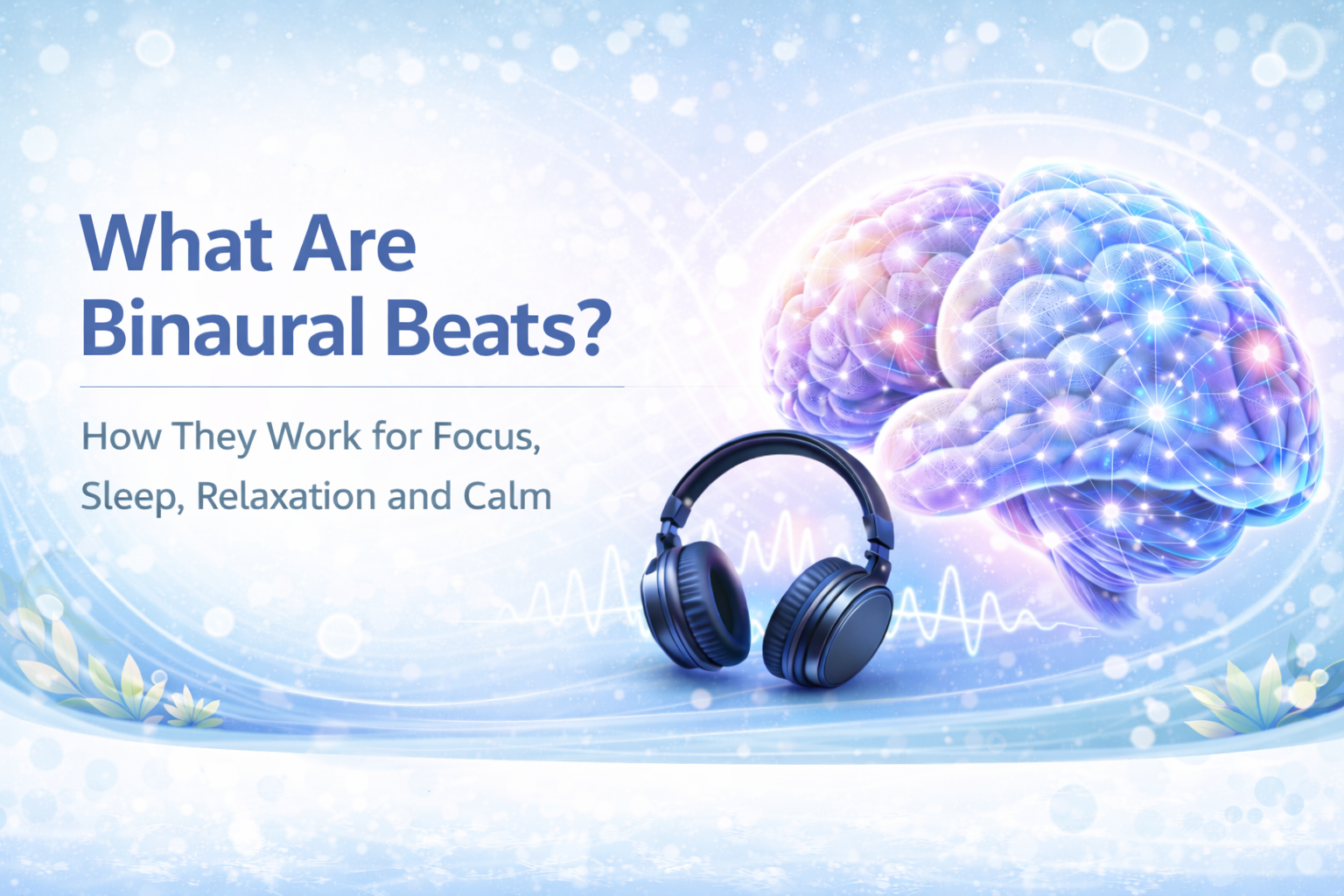
Binaural beats are an auditory effect created when two slightly different sound frequencies are played separately into each ear. Instead of hearing only two separate tones, the brain may perceive a third rhythmic beat based on the difference between them. This is why binaural beats are often described as a type of auditory illusion.
For example, if one ear hears a 200 Hz tone and the other hears a 210 Hz tone, the brain may perceive a 10 Hz beat. This perceived beat is what people refer to as the binaural beat.
Binaural beats are often used in audio designed for focus, relaxation, meditation, and sleep preparation. They sit inside the broader topic of brainwave entrainment, which includes other rhythmic audio tools such as isochronic tones and monaural beats.
Related Page: What Is Brainwave Entrainment?
What Makes Binaural Beats Different?
The main feature that makes binaural beats different is that each ear receives a different tone. The effect happens inside the auditory system as the brain processes the difference between the two frequencies.
This is different from ordinary music, white noise, or a single pulsing tone. It is also different from monaural beats, where the tones are combined before reaching the ears, and from isochronic tones, which use a single sound that pulses on and off in a steady rhythm.
Because binaural beats depend on separate input to each ear, headphones are usually recommended.
Related Page: Do You Need Headphones for Binaural Beats?
How Do Binaural Beats Work?
Binaural beats work by presenting two nearby frequencies to the left and right ears separately. The brain does not hear a literal third sound in the room. Instead, it interprets the difference between the two tones as a rhythmic beat.
That perceived beat is usually much lower than the tones being played. For example:
- Left ear: 250 Hz
- Right ear: 258 Hz
- Perceived binaural beat: 8 Hz
This is one reason binaural beats are discussed alongside brain waves. Some audio creators match the beat difference to ranges commonly associated with relaxed wakefulness, drowsiness, meditation, or alert concentration.
That said, it is important not to overstate this. Binaural beats are better viewed as a structured audio tool that may help shape a mental environment, not as a guaranteed way to force the brain into a specific state.
Why Are Headphones Usually Needed?
Headphones are usually needed because each ear must receive a different tone. If the tones mix together too early through speakers in a room, the intended binaural effect may be weakened or lost.
That is why most binaural beat programs recommend stereo headphones or earbuds. The left-right separation matters.
Related Page: Do You Need Headphones for Binaural Beats?
Binaural Beats and Brain Waves
Binaural beats are often grouped into broad “brain wave” ranges based on the difference between the two tones. These ranges are usually discussed like this:
- Delta: often associated with deep sleep
- Theta: often associated with drowsiness, meditation, and deep relaxation
- Alpha: often associated with calm wakefulness and relaxed focus
- Beta: often associated with alert thinking and active concentration
- Gamma: often associated with higher-level cognitive processing
These categories are useful for learning the basic idea, but real brain activity is more complex. The brain is not simply “in one wave” at a time, and different people may respond differently to the same audio.
Related Page: Brain Waves Explained: Alpha, Beta, Theta, Delta and Gamma
What Are Binaural Beats Used For?
People commonly use binaural beats for wellness, productivity, and routine support. They are most often explored for:
Focus and Concentration
Some users listen to binaural beats during work, study, reading, writing, or deep work sessions. In this context, the goal is usually to create a more stable and distraction-reduced environment.
Related Page: Binaural Beats for Focus: Can They Help Concentration?
Relaxation and Stress Relief
Others use them during quiet time, journaling, stretching, or winding down after a demanding day. The audio may help create a calmer routine, especially when paired with breathing, reduced screen stimulation, and a quiet setting.
Meditation
For some beginners, binaural beats can act as an anchor during meditation. The steady audio gives the mind something simple to return to when thoughts drift.
Sleep Preparation
Binaural beats are also used in evening routines. The aim is not to “knock the brain out,” but to support a calmer transition into rest.
Related Page: Binaural Beats for Sleep: What to Know Before You Try Them
Do Binaural Beats Really Work?
This is the question most people want answered straight away.
The most balanced answer is that binaural beats may help some people in certain settings, but they are not a miracle tool and they do not work the same way for everyone. Some users notice better focus, a calmer mood, or easier relaxation. Others notice very little.
Results can vary based on the frequency used, the session length, volume, the user’s expectation, the listening environment, and whether the audio feels soothing or distracting.
A practical way to think about binaural beats is this: they may support a routine, but they should not replace basic brain health foundations such as sleep, nutrition, hydration, stress management, and recovery time.
Related Page: Brain Health Guide: Improve Focus, Memory & Cognitive Performance Naturally
Binaural Beats vs Isochronic Tones
Binaural beats and isochronic tones are both discussed under brainwave entrainment, but they are not the same.
- Binaural beats: use two slightly different tones, one in each ear
- Isochronic tones: use a single tone that pulses on and off in a regular rhythm
Many people compare the two when choosing audio for focus, sleep, or calm. Some prefer the softer feel of binaural beats, while others find pulsed tones more obvious or more distracting.
Related Page: Isochronic Tones vs Binaural Beats: Key Differences Explained
Potential Benefits of Binaural Beats
Depending on the person and the context, binaural beats may offer benefits such as:
- Supporting focus during work or study sessions
- Helping create a calmer pre-sleep routine
- Acting as a meditation aid for beginners
- Providing a structured audio cue for relaxation
- Making deep work sessions feel more intentional
These benefits are best seen as potential, not guaranteed. A calm room, sensible volume, and the right routine may matter as much as the audio itself.
Are Binaural Beats Safe?
For many healthy adults, listening to binaural beats at a moderate volume is generally low risk. But sensible use still matters.
Use extra caution if you:
- Have epilepsy or a seizure disorder
- Are sensitive to repetitive sound
- Develop headaches, agitation, or dizziness during use
- Have a serious neurological or mental health condition
- Are planning to use them while driving or doing anything that requires full attention
Binaural beats should not be treated as a replacement for medical care or as a cure for anxiety, insomnia, burnout, or cognitive symptoms.
Related Page: Are Binaural Beats Safe? Benefits, Risks and What to Know
How to Try Binaural Beats for the First Time
If you want to test binaural beats, keep it simple.
Choose one goal
Pick one use case such as focus, relaxation, meditation, or sleep preparation.
Use headphones
This helps preserve the left-right separation that binaural beats rely on.
Start with short sessions
Begin with 10 to 20 minutes and see how you respond.
Keep the volume moderate
The audio should feel comfortable, not intense.
Use them in the right context
For example, use focus audio during a work block, or calming audio during a wind-down routine.
Pay attention to how you feel
If the track feels soothing or helpful, it may be worth continuing. If it feels distracting or unpleasant, try a different track or stop using it.
Common Misunderstandings About Binaural Beats
They are not magic frequencies
Binaural beats are often marketed in an exaggerated way. It is better to see them as one possible support tool, not as an instant brain hack.
They do not replace healthy habits
If sleep, stress, hydration, nutrition, and recovery are poor, binaural beats alone are unlikely to solve the problem.
Related Page: Brain Health Lifestyle: Sleep, Stress, Nutrition & Daily Habits
They do not affect everyone in the same way
Some people enjoy them. Others prefer silence, music, nature sounds, or guided meditation instead.
Binaural Beats as Part of a Wider Brain Health Routine
The most realistic place for binaural beats is inside a bigger system. They may help support focus, calm, or sleep routines, but they work best when combined with:
- Consistent sleep timing
- Good work-rest structure
- Hydration
- Balanced nutrition
- Movement
- Stress management
- Reduced digital overload
Related Page: Brain Fog: Causes, Symptoms & How to Clear It
Related Page: Memory & Cognitive Function
Final Thoughts
Binaural beats are a specific type of auditory beat effect created when two slightly different tones are played separately into each ear. They are often used in audio programs designed for focus, relaxation, meditation, and sleep preparation.
The best way to approach them is with realistic expectations. They may be useful for some people, especially as part of a structured routine, but they are not a cure-all and they should not replace broader brain health habits.
If you want the bigger picture, continue with the full Brainwave Entrainment pillar or return to the Brain Health Hub.
FAQs About Binaural Beats
What are binaural beats?
Binaural beats are an auditory effect created when two slightly different sound frequencies are played separately into each ear. The brain may perceive the difference between those tones as a rhythmic beat.
How do binaural beats work?
They work by giving each ear a slightly different tone. The auditory system processes the difference and may create the perception of a third rhythmic beat based on that frequency gap.
Do binaural beats need headphones?
Usually, yes. Headphones help keep the tones separated so each ear receives a different signal, which is important for the binaural effect.
Are binaural beats the same as brainwave entrainment?
No. Binaural beats are one type of brainwave entrainment. The broader category also includes isochronic tones, monaural beats, and other rhythmic audio tools.
Can binaural beats help with focus?
Some people use binaural beats during study or work sessions and find them helpful for creating a more stable focus environment. Results vary from person to person.
Can binaural beats help with sleep?
They may help some people relax during an evening wind-down routine, but they should not be seen as a cure for chronic sleep problems.
Are binaural beats safe?
For many healthy adults, moderate-volume listening is generally low risk. People with seizure disorders, neurological conditions, or sensitivity to repetitive sound should be more cautious.
What is the difference between binaural beats and isochronic tones?
Binaural beats use two slightly different tones presented separately to each ear. Isochronic tones use a single pulsing tone that turns on and off at a regular rate.
Do binaural beats work for everyone?
No. Some people find them calming or useful, while others notice little effect or find them distracting.
What is the best way to start using binaural beats?
Start with one goal, use headphones, keep the volume comfortable, and try a short 10 to 20 minute session in a quiet setting.
Related Articles
- Brainwave Entrainment: Binaural Beats, Brain Waves & Audio Tools for Focus, Sleep and Calm
- What Is Brainwave Entrainment?
- Brain Waves Explained: Alpha, Beta, Theta, Delta and Gamma
- Isochronic Tones vs Binaural Beats: Key Differences Explained
- Are Binaural Beats Safe? Benefits, Risks and What to Know
Explore Binaural Beats in Context
Binaural beats are only one part of the wider brainwave entrainment topic. Explore the full pillar for related guides on brain waves, safety, focus, sleep, and practical audio tools.

Medically Reviewed for Accuracy
This content has been reviewed for accuracy and clarity by the Cognitive Performance Hub Medical Review Team, using current research and evidence-based guidelines.
Our review process ensures that information related to brain health, cognitive performance, and wellness strategies aligns with current scientific understanding and best practices.
Written by Cognitive Performance Hub Editorial Team
Our editorial team consists of health researchers and writers specializing in brain health, cognitive performance, and evidence-based wellness strategies.
We create clear, research-informed content designed to help readers improve focus, enhance memory, reduce brain fog, and support long-term cognitive health.